
Written by: Carl Trinkle
27 min read
Imagine it: You pull into your driveway after sunset and see your home softly illuminated against the evening sky.
The front entry welcomes you with a warm glow. The trees in your yard are stunning focal points. The patio invites you in – even though it's long after the sun has gone down.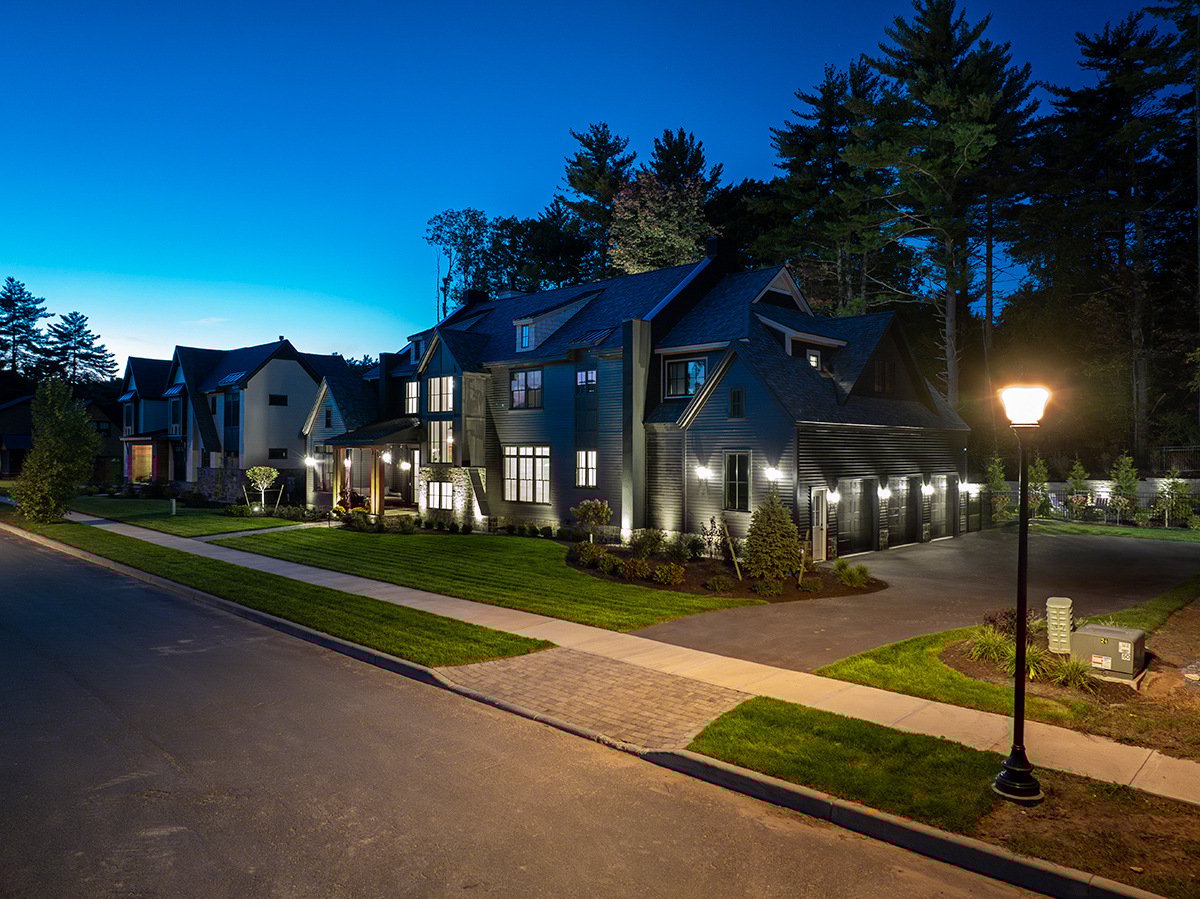
Thoughtfully designed landscape lighting transforms your outdoor space. It can magically (and practically) turn something you admire during the day into a place you can continue to admire - and even keep enjoying - well into the evening.
For homeowners throughout New York's Capital Region, outdoor living is a trend that goes beyond an extension of the home itself. Especially when seasonality comes into play. Long summer nights become longer, while shorter winter days can be stretched further – stretching the enjoyment of outdoor spaces into the twilight hours.
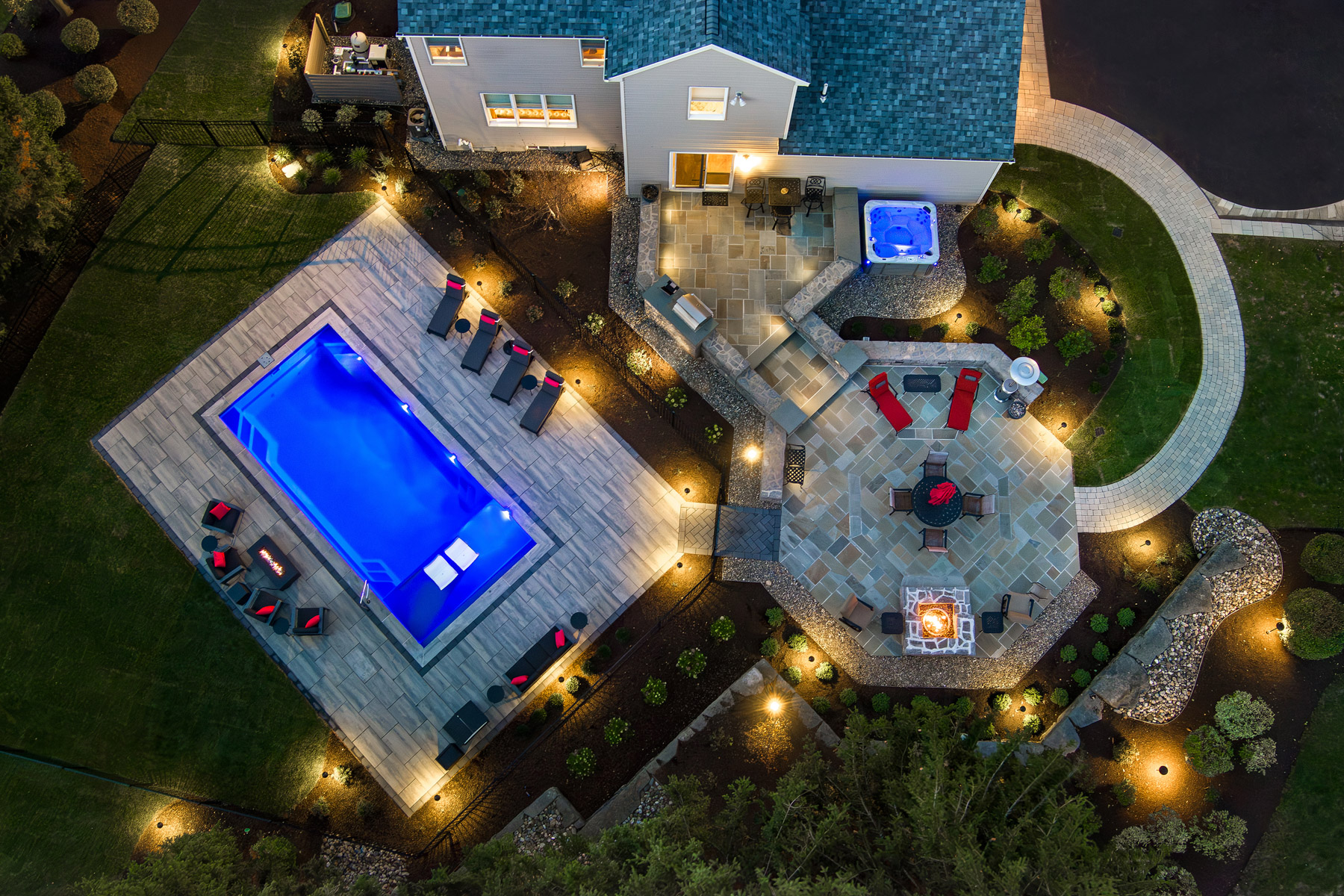
Patios, pools, outdoor kitchens, gardens, and gathering spaces represent significant investments – but many properties are only usable for part of the day because they lack the proper lighting that keeps them safe and illuminated.
Professional landscape lighting design enhances these spaces in a few different ways:
-
Creating standalone beauty
-
Improving safety
-
Increasing security
-
Extending the amount of time you can comfortably spend outdoors
It's like a win-win-win-win, if you ask us.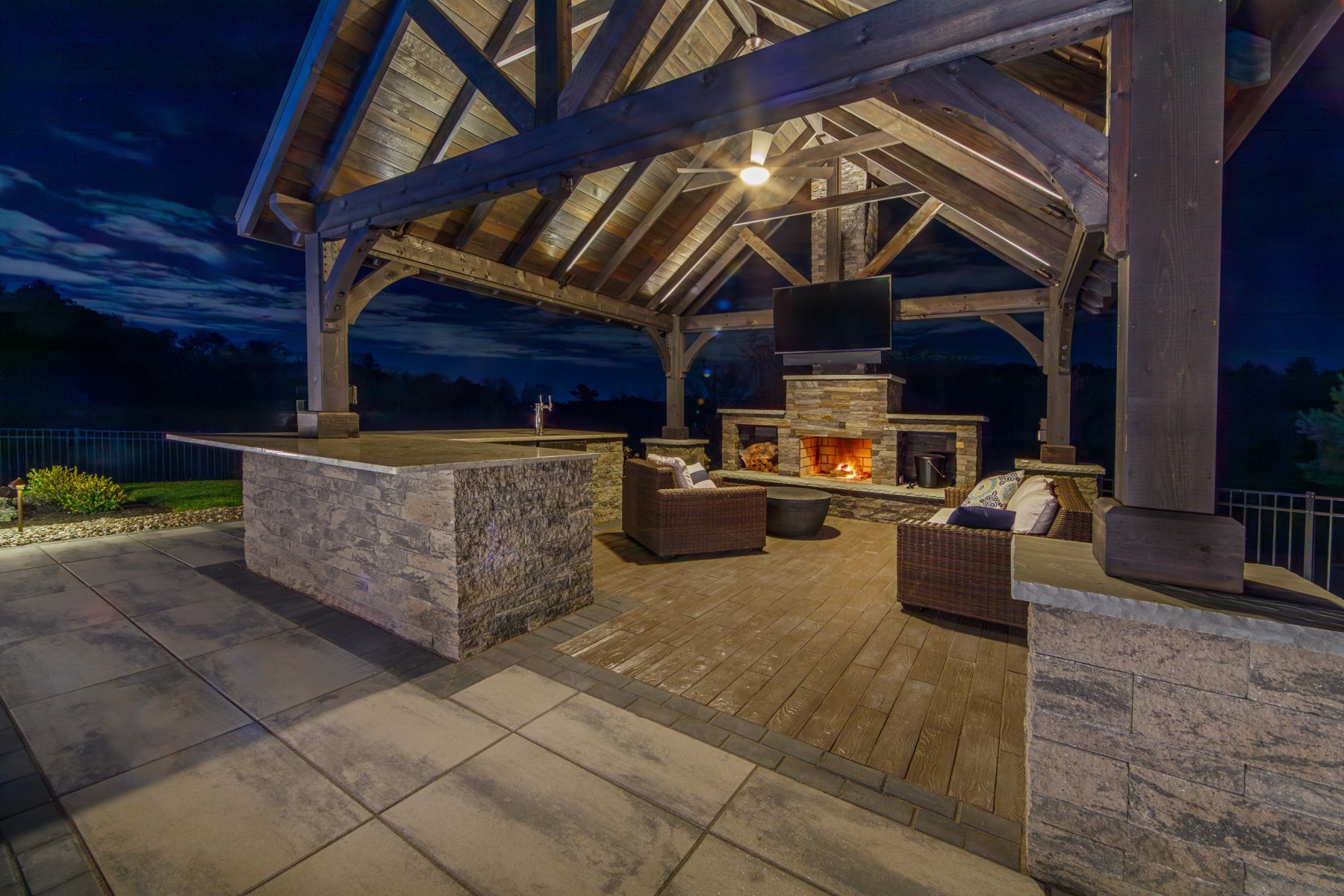
And unlike temporary floodlights or inexpensive solar fixtures, professionally installed outdoor lighting for homes is built to last and carefully designed around your property's architecture, landscape, and the way your family lives. That means every fixture serves a specific purpose that makes sense for your space – whether it's guiding visitors along a pathway, highlighting mature trees, or creating ambiance around an outdoor dining area.
In this complete landscape lighting guide, we're going to explore everything homeowners should know – from design techniques and installation to costs, maintenance, and choosing the right contractor – about landscape lighting.
Jump To:
Why Landscape Lighting Is an Essential Part of Outdoor Living
How Professional Landscape Lighting Is Designed
Avoiding A Common Lighting Mistake
Where to Use Landscape Lighting Around Your Home
Landscape Lighting Ideas and Techniques
Smart Landscape Lighting Brings Control Outdoors
Professional Landscape Lighting vs. DIY Outdoor Lighting
What to Expect During a Professional Landscape Lighting Installation
Landscape Lighting Costs
Maintaining Landscape Lighting in New York's Capital Region
How to Choose the Right Professional Landscape Lighting Company
Working With Gallivan to Transform Your Landscape
So, if you're planning a new outdoor living project or simply looking to enhance an existing landscape, you'll see just how professional lighting can elevate your property throughout every season in Upstate New York.
Why Landscape Lighting Is an Essential Part of Outdoor Living
Many homeowners initially consider landscape lighting for a simple reason – they want their home to look beautiful after dark.
Sure, curb appeal is certainly one of its greatest benefits; but professionally designed landscape lighting installation can offer you far more than just aesthetics. (Not that aesthetics are a bad reason – trust us, they're not).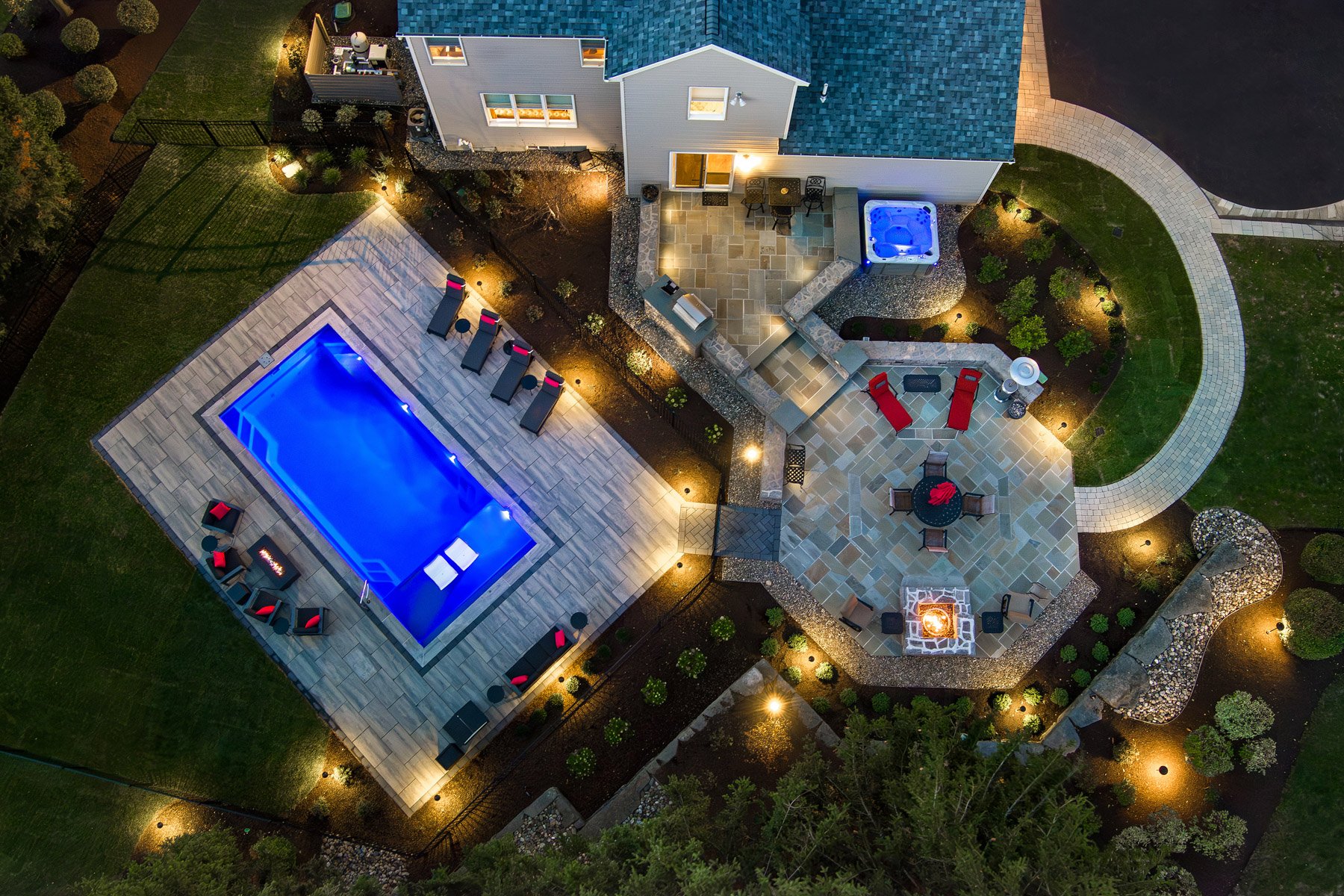
When lighting is integrated into your overall landscape design and plan, it creates an outdoor environment that's functional, welcoming, and enjoyable throughout the year – as well as beautiful.
Exterior Lighting Enhances Curb Appeal After Sunset
Call us crazy, but we've always believed that a beautifully landscaped property shouldn't disappear once the sun goes down. In the winter, especially, when the sun sets earlier, we often have to say goodbye to our beautiful landscapes until it brightens up the next day (often later than we'd like).
But strategically placed lighting extends that timespan for you. It highlights the architectural details of your home, showcases specimen trees and gardens, and creates depth across the landscape after dark. Instead of harsh floodlights that flatten everything they illuminate, layered lighting draws the eye naturally from one feature to another, creating an elegant nighttime appearance.
For luxury homes (especially throughout Saratoga Springs, Clifton Park, and Albany), landscape lighting adds a particular level of sophistication that complements premium outdoor living spaces.
Sure, it highlights the home's outdoor features, but it also elevates the home's overall presence.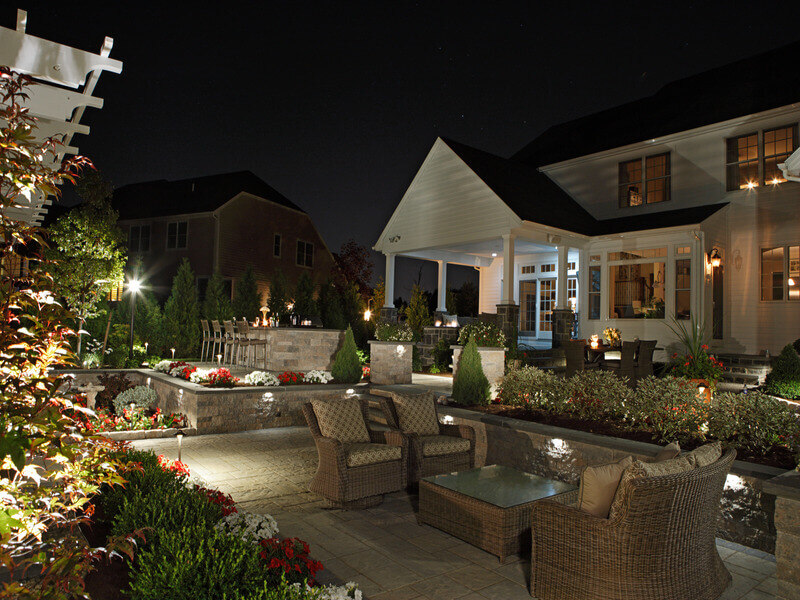
You Can Extend the Time You Spend Outdoors
One of the greatest advantages of outdoor lighting is that it allows you to enjoy your landscape well beyond daylight hours. In other words, you're not limited to what the sun allows and can host backyard retreats to your heart's content.
So, whether you're hosting friends on the patio, cooking in your outdoor kitchen, or watching your kids swim in the pool, you can have lighting that's cozy, functional, and inviting. (And let's not forget safer).
This is especially valuable in Upstate New York, where shorter fall and winter days mean darkness arrives much earlier. Rather than ending outdoor activities at sunset like you've had to in the past, professionally designed lighting lets homeowners maximize every season past sunset.
Improve Safety Around Your Property
This is largely practical, but that doesn't mean it's not important. In fact, safety is more important than simple aesthetics (there, we said it).
Things like dark walkways, uneven stone paths, retaining wall steps, pool decks, and driveways can all make for potential hazards after sunset. With proper lighting, your visibility improves without overwhelming the space with excessive brightness that comes with things like floodlights.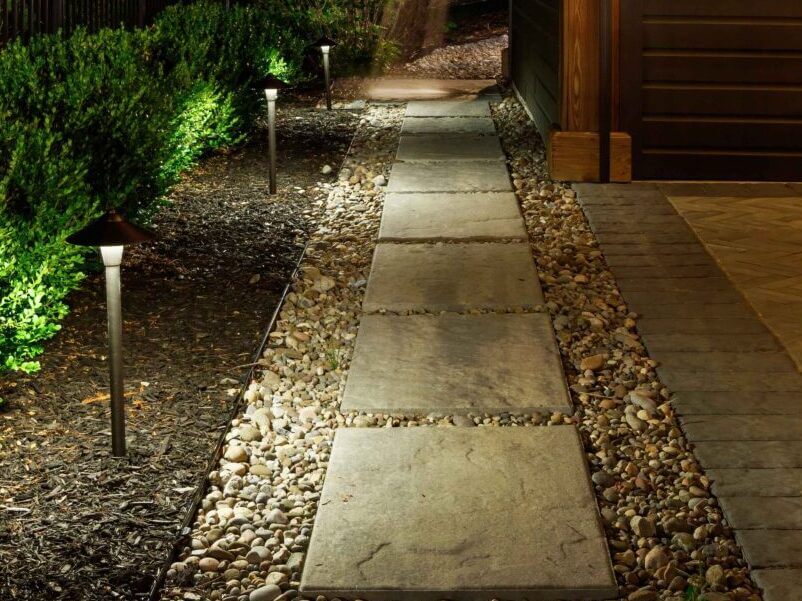
Some popular common areas that benefit from safety lighting include:
-
Walkways
-
Front entrances
-
Garden paths
-
Staircases
-
Driveways
-
Pool decks
-
Outdoor kitchens
-
Seating areas
Instead of simply adding brighter lights or more DIY lights, you can work with professional designers who can position fixtures to illuminate popular travel paths while maintaining a warm, inviting atmosphere.
Add Security Without Sacrificing the Beauty of Your Space
You likely already know this, but a well-lit property can naturally discourage unwanted visitors or unexpected solicitors – all while giving homeowners greater peace of mind.
With professional landscape lighting service, you can eliminate dark corners around the property without giving off the harsh feel that haphazard floodlights can. Instead, you can opt for layered lighting. It will make sure you have the visibility you're seeking, but in an intentional way that highlights your space's features.
The coolest thing is, smart lighting systems can automate schedules or self-adjust based on the time the sun sets so that it always seems like someone is home (even when you're not).
Protect Your Investment
It's no secret that landscape additions of any kind – when professionally done – are investments. It's also no secret that sometimes, depending on the project, it can be a significant investment.
Lighting helps homeowners enjoy and protect that investment better. But that's not all.
Professionally designed lighting may also:
-
Showcase premium landscape features that would otherwise disappear at night
-
Keep focal points highlighted (luxury pool, outdoor kitchens, custom patios, etc.)
How Professional Landscape Lighting Is Designed, Step by Step
One of the biggest misconceptions about landscape lighting design is that it's a quick, one-off project where pros place fixtures willy-nilly throughout the yard. Realistically, it's much more complex than that.
Professional lighting design is a lot more like creating a work of art or solving a complicated puzzle – every fixture has a specific purpose, and every beam contributes to the overall experience. Knowing where to place that light, how to layer it, and how to use it to convey a feeling is truly a skill that takes training.
Step 1: Examine the Way You Use Your Property
Every successful lighting plan begins with understanding how people actually use and move through their outdoor spaces.
Some families may focus on entertaining with expansive patios and outdoor kitchens. Others want to showcase mature trees, gardens, or architectural features. Others might simply want safer walkways for guests and family members.
The lighting plan should start with the singular goal of supporting that lifestyle, whatever it might be.
Step 2: Layer Lighting for Depth and Dimension
Once you understand the overall goal of the lighting, it's time to figure out how to accomplish that goal through layers. Professional lighting – if the designers are worth their salt – relies on multiple layers working together to accomplish that goal seamlessly.
Instead of flooding the yard with bright fixtures, designers combine different lighting techniques to create contrast, texture, and visual interest.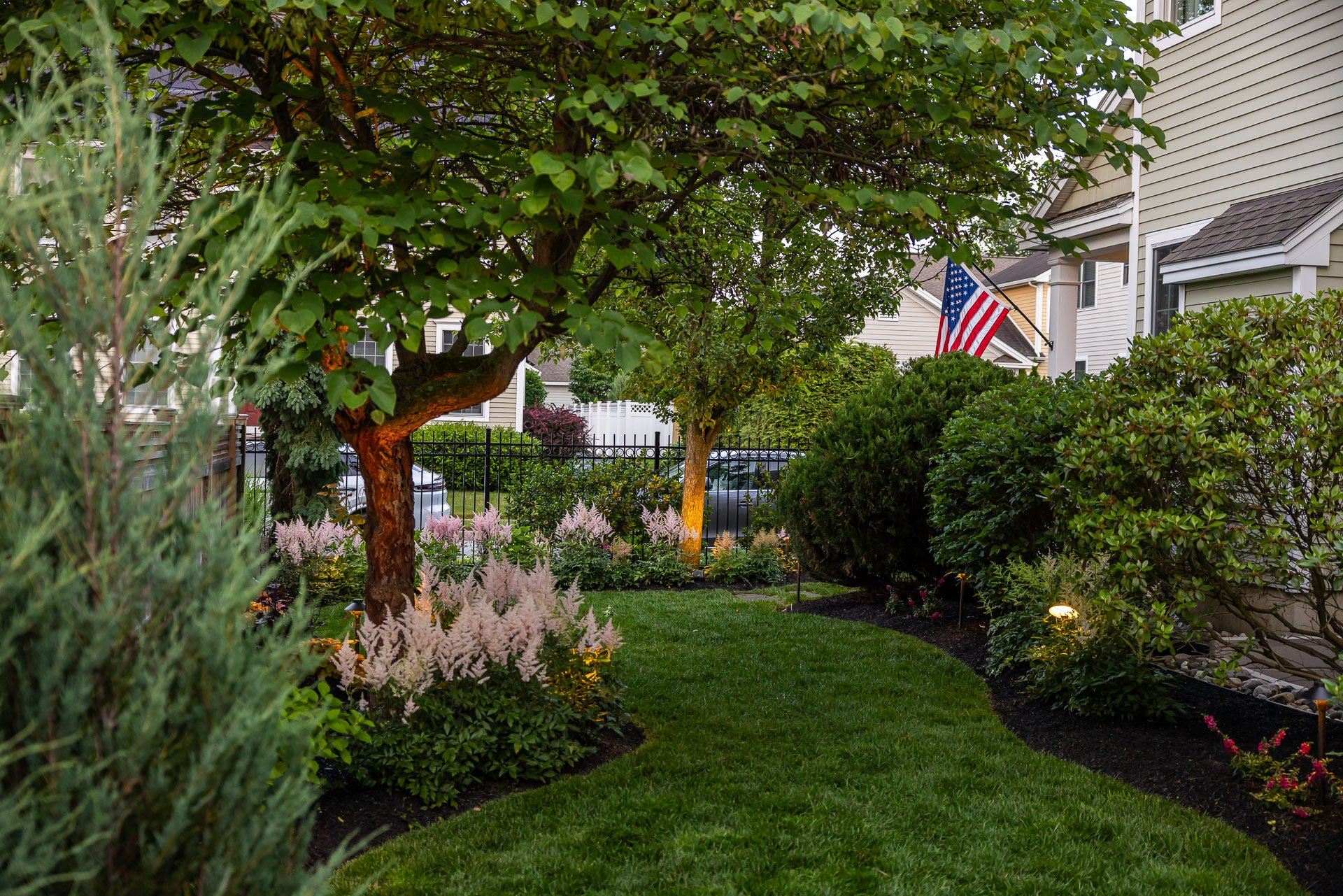
Every project will have different requirements, but a complete system usually includes:
-
Ambient lighting that establishes an inviting overall glow
-
Task lighting for stairs, seating areas, outdoor kitchens, and pathways
-
Accent lighting that highlights trees, sculptures, or gardens
-
Architectural lighting that showcases columns, stonework, and other home features
These multiple layers help curate a landscape that feels beautiful and illuminated – without it looking like giant spotlights are everywhere.
Step 3: Create Focal Points
One of the hallmarks of exceptional landscape lighting placement is actually knowing where not to place fixtures. Rather than lighting every tree and shrub, professional designers will identify focal points that deserve a little bit of extra attention.
It's always different for every project, but these might include:
-
A mature maple tree
-
A dramatic stone entrance
-
Water features
-
Outdoor fireplaces
-
Specimen plantings
-
Architectural columns
-
Historic stone walls
The surrounding landscape will always remain subtly illuminated, but these elements should become visual anchors that draw the eye.
Step 4: Choose the Right Color Temperature
Even if you don't realize it consciously, you know that not all outdoor lighting looks (or feels) the same.
Warm white lighting is often preferred for residential landscapes because it creates a welcoming atmosphere that complements natural stone, wood, and planting materials. Cooler lighting can appear harsh and commercial, especially on luxury residential properties.
Of course, not every rule is set in stone. Generally, though, these are our professional thoughts on light temperatures:
-
Warm White: Usually around 2700 Kelvin (K). Best used in luxury residential landscapes, natural stone, brick, wood, gardens, and outdoor living spaces.
-
Soft White: Usually around 3000 K. Good for modern homes, contemporary architecture, patios, walkways, and some general landscape lighting.
-
Neutral White: Anywhere from 3500 K - 4000 K. Mostly for commercial properties, task lighting, and some commercial security needs.
-
Cool White: Usually around 5000 K - 6500 K. Very illuminating, can be harsh. Used in parking lots, sports fields, and industrial lighting. It is very rare we recommend this temperature for luxury homes.
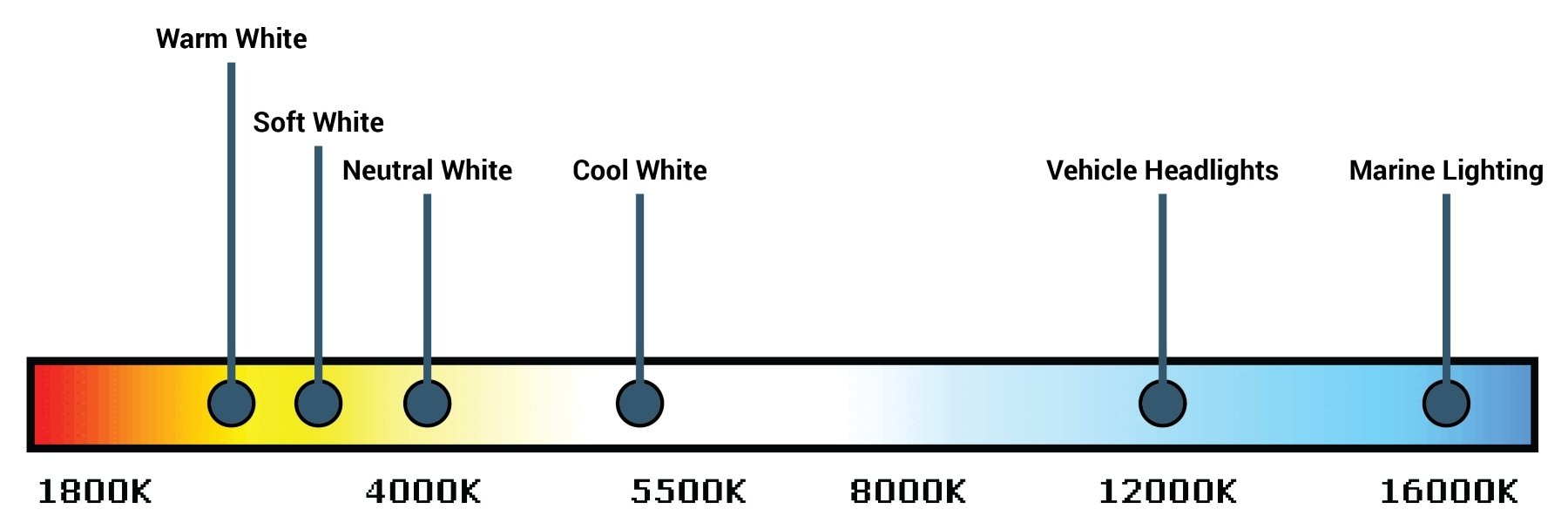 Selecting the appropriate color temperature or temperatures (because often we'll blend them!) ensures the finished design feels beautiful and purposeful, not just "bright enough”. If you incorporate smart lighting features into your plan, you can even adjust these on the fly in some cases.
Our Top Tip for Avoiding A Common Lighting Mistake
One of the biggest issues we see in landscape lighting is the embrace of the idea "more light means better results."
Pros who do this all the time know that more light doesn't necessarily mean it'll accomplish a goal better. Unfortunately, a lot of homeowners miss this memo and make the mistake of over-lighting their property.
Too many fixtures can cause a lot of issues, like:
-
Create glare
-
Flatten architectural details
-
Eliminate natural shadows
-
Make the landscape feel fake or inauthentic
Instead, professional designers carefully balance light with darkness to create a visual depth that feels more natural and organic. Proper fixture placement also minimizes glare into neighboring properties and keeps light directed where it's actually needed.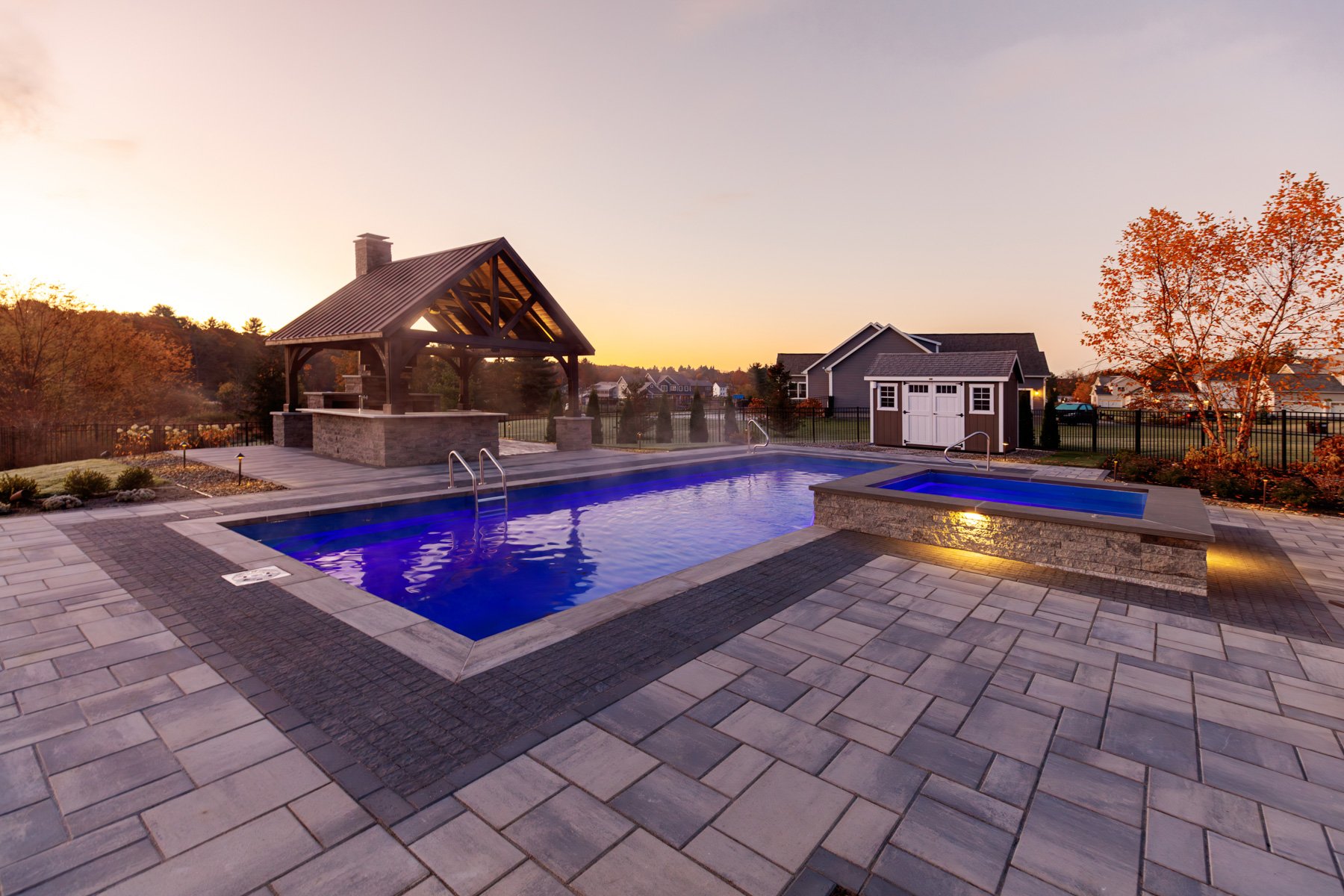
Where to Use Landscape Lighting Around Your Home
One of the greatest advantages of professional landscape lighting in our Capital Region is its versatility.
A thoughtfully designed system will focus on more than just one area of your property. When it's done right, it should create a cohesive nighttime experience that connects your home's architecture, landscape, and outdoor living spaces.
Rather than asking, "Where should landscape lights be placed?", a better question we always pose is: "How do you want to experience your property after dark?"
That's the answer that will guide every lighting decision we make.
Front Entryways and Driveways
Your home's entrance creates the first impression for family, guests, and visitors. Think of it like a warm handshake.
Lighting the front entry helps with visibility, but it also sets the tone for a welcoming atmosphere while highlighting architectural details that could otherwise disappear (and make less of an impact) after sunset.
Depending on your home's design, lighting may be used to accent:
-
Front walkways
-
Stone or brick entry columns
-
Driveway borders
-
Decorative masonry
-
Foundation plantings
-
Address markers
-
Mature ornamental trees
Instead of relying on a single porch light, multiple layers of illumination create depth and elegance, all while making it easier to navigate the property at night.
Walkways and Garden Paths
From a safety perspective, few elements are more important than properly illuminated walkways.
Whether guests are walking from the driveway to the front door or moving through the backyard toward a patio or fire feature, walkway lighting and pathway lighting improve safety while enhancing the overall experience.
Professional path lighting is carefully spaced to create an even rhythm of light rather than a runway effect. The goal is always to illuminate the walking surface without producing harsh glare or distracting hotspots.
Patios and Outdoor Living Spaces
Today's outdoor living spaces are being designed to be enjoyed all day – from morning coffee until late-night conversations around the fire (if you've got one).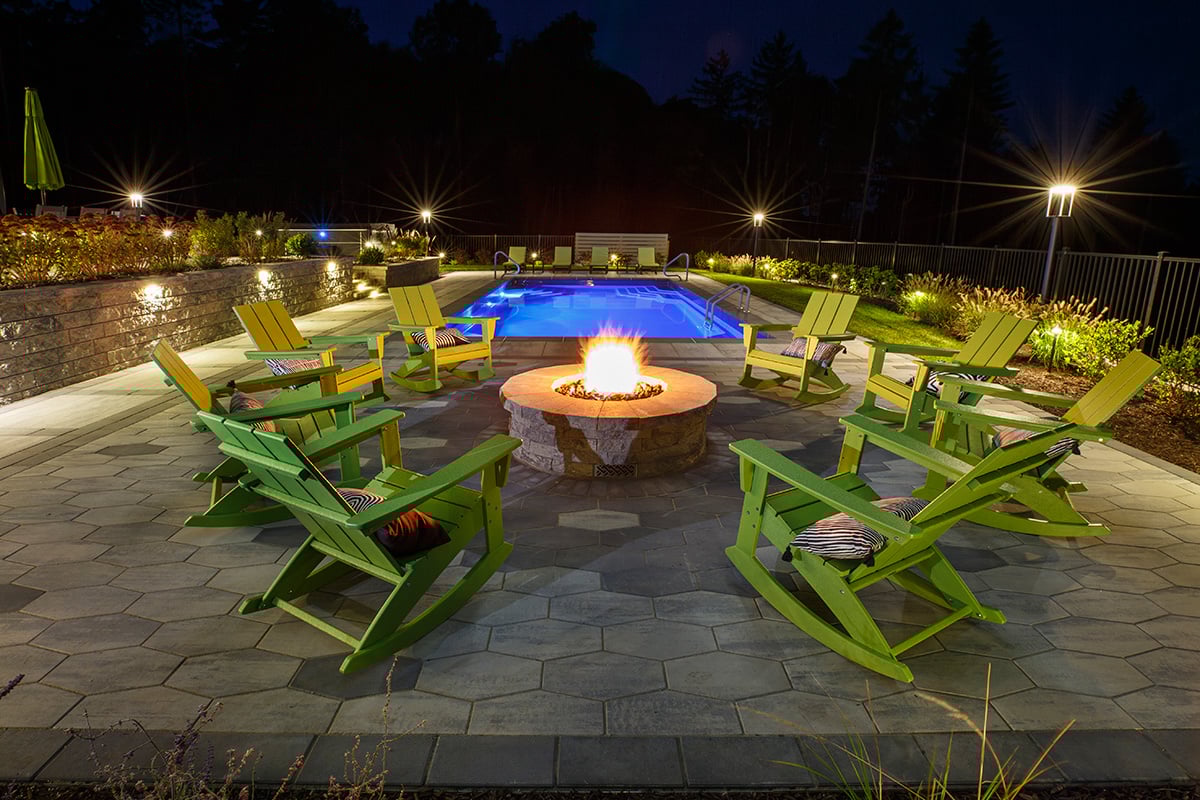
Whether your patio is used for entertaining, dining, or relaxing, lighting plays an important role in setting the mood. Some of the most effective patio lighting ideas play on:
-
Integrated lighting beneath seating walls
-
Step lighting for elevation changes
-
Accent lighting around surrounding gardens
-
Soft overhead lighting beneath pergolas or pavilions
-
Lighting that highlights nearby specimen trees
Rather than making the patio feel brightly lit, professional landscape lighting creates comfortable layers that encourage people to linger outdoors.
Pools and Dramatic Water Features
Pools become the focal points after dark if you've got the right lighting design – if you don't, they tend to disappear.
Not only is that a huge disappointment (you invested in that pool; it should be a statement piece!), it's also a risky move from a safety perspective (you don't want someone falling in, right?).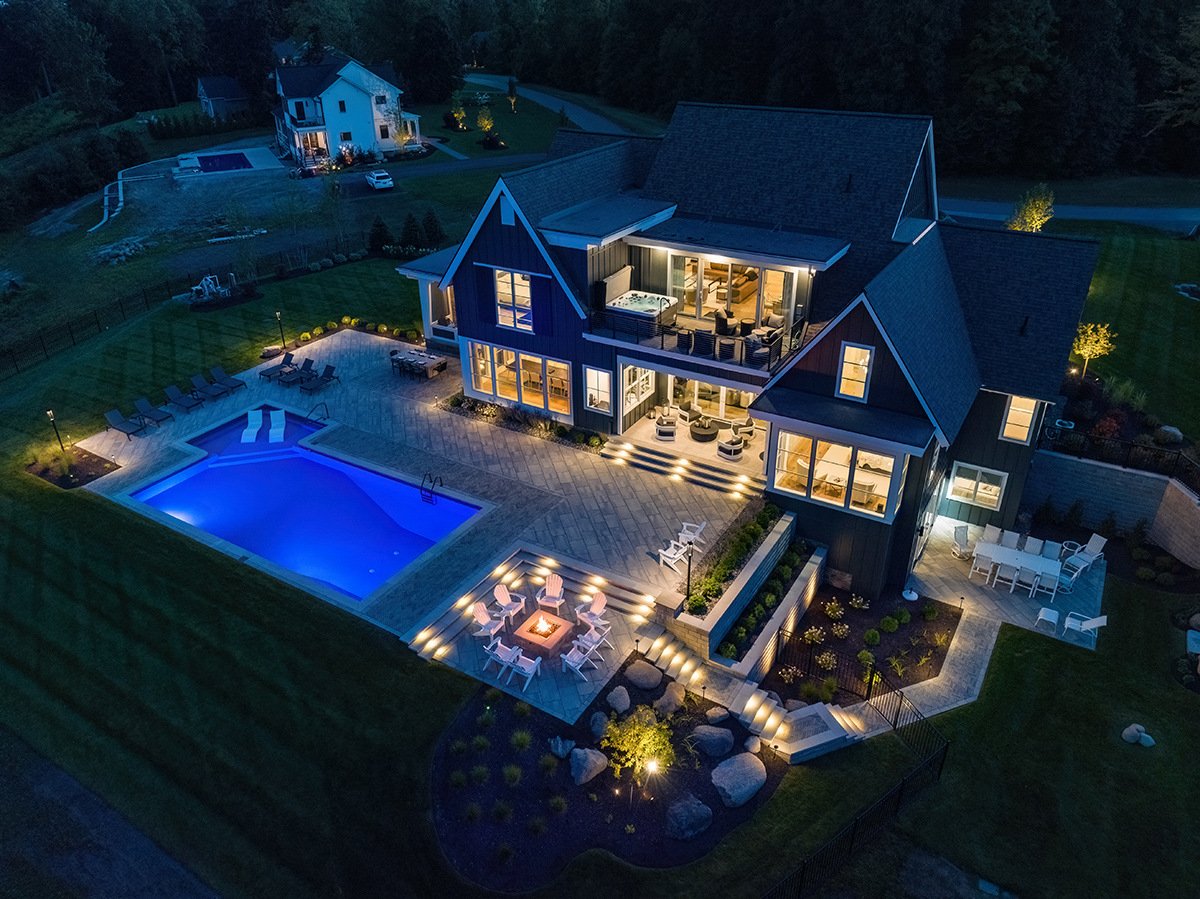
Professional pool lighting ideas often extend beyond underwater fixtures to include surrounding hardscapes, seating areas, nearby trees, and architectural features.
-
Lighting around pools can:
-
Improve nighttime safety
-
Highlight water movement
-
Create reflections across the landscape
-
Enhance surrounding entertainment spaces
-
Make evening swimming more inviting
Other water features – like fountains, waterfalls, and ponds – can all become stunning nighttime features when illuminated correctly. From a pro's standpoint, we have to say that the movement of water interacts beautifully with carefully placed light, creating an entirely different visual experience than during daylight hours.

Trees, Gardens, and Landscape Features
Some of the most memorable landscape lighting designs focus on nature, not necessarily the added hardscapes or features.
Large shade trees (which we have plenty of here), ornamental specimens, flowering gardens, and carefully curated plant beds deserve to remain visible after sunset just as much as that outdoor kitchen does.
Tree uplighting is one of the most dramatic techniques to accomplish that.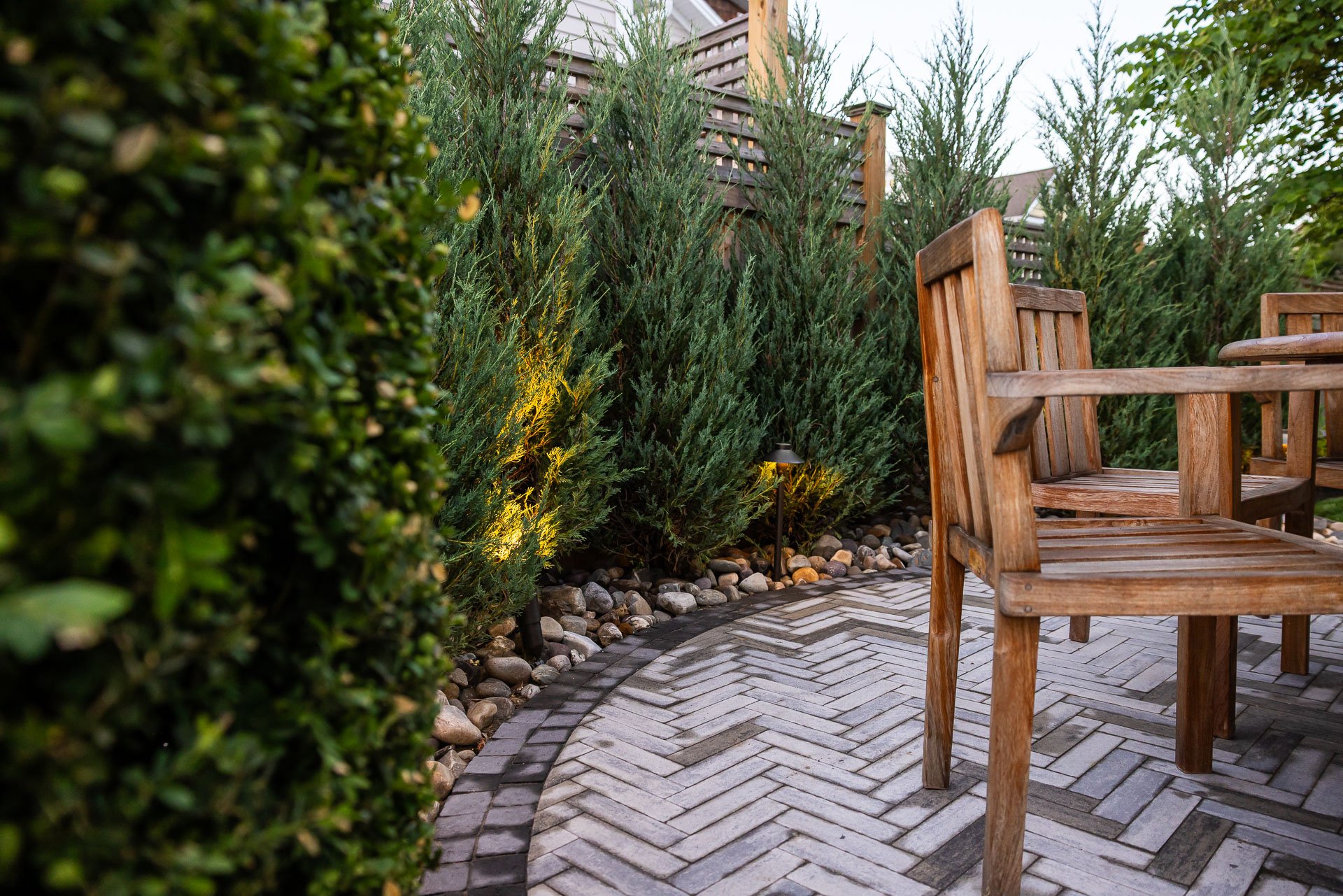
By placing fixtures near the base of a tree and directing light upward through the canopy, designers create texture, movement, and seasonal interest. These details give the landscape dimension while preserving a natural nighttime appearance.
Outdoor Kitchens, Fire Features, and Entertainment Areas
Outdoor entertaining rarely ends when the sun goes down – and if it has been ending when the sun goes down, you're probably missing out.
Lighting around outdoor kitchens should provide enough illumination for cooking while maintaining a relaxed atmosphere for dining and conversation. Similarly, fire pits and outdoor fireplaces benefit from subtle lighting that complements the natural glow of the fire (without competing with it).
When entertaining spaces are thoughtfully illuminated, you can comfortably host family gatherings, celebrations, and quiet evenings outdoors throughout much of the year.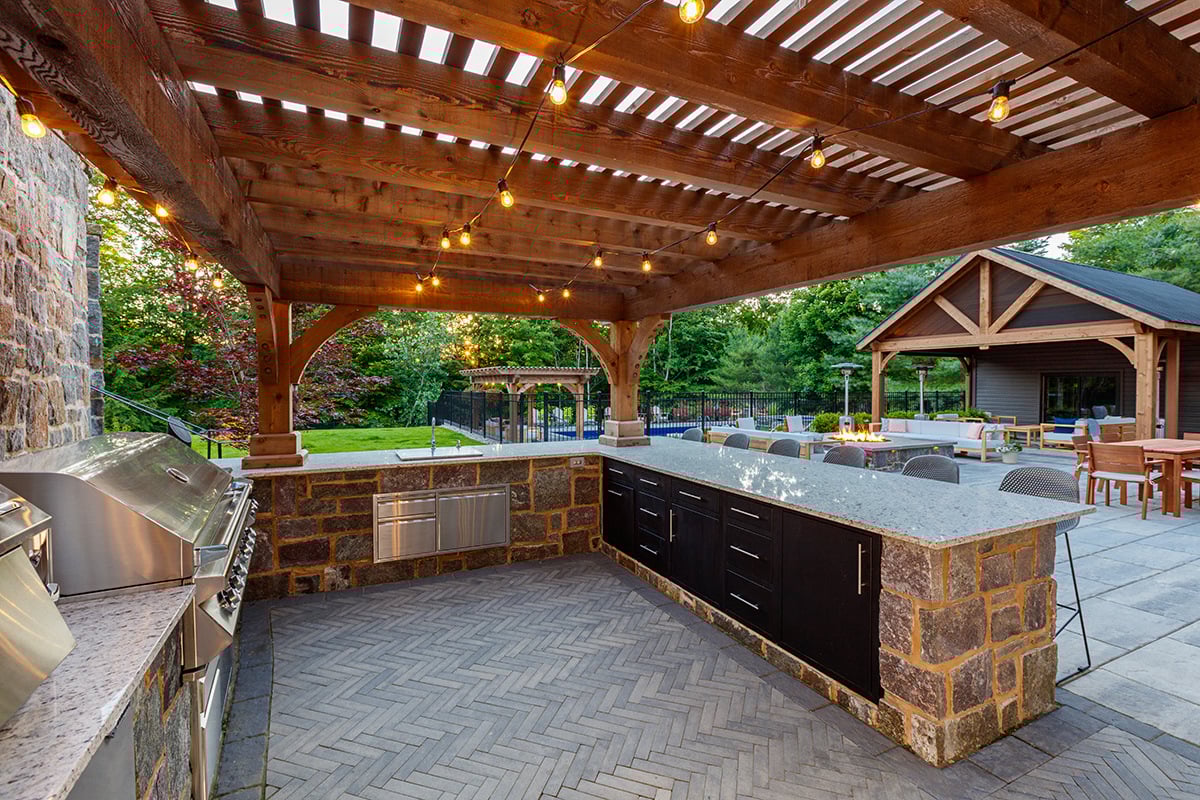
A Few Of Our Favorite Landscape Lighting Ideas and Techniques
Exceptional landscape lighting design is about much more than choosing attractive fixtures. It's about selecting the right lighting techniques to create depth, texture, and visual interest throughout the property. Professional designers often combine several of these methods (and more) to produce a balanced, layered result.
-
Path Lighting: This is one of the most recognizable forms of landscape lighting and one of the easiest to overdo. Rather than placing fixtures every few feet, professional designers space them strategically to guide movement while maintaining a natural appearance. The result is a pathway that's safe to navigate without drawing unnecessary attention to the fixtures themselves.
-
Uplighting: This kind of lighting directs light upward to emphasize vertical elements. This technique is commonly used for mature trees, stone facades, columns, garden walls, and entry features. The dramatic shadows and texture created by uplighting add depth and elegance that simply can't be achieved with overhead lighting alone.
-
Downlighting: This lighting reverses the effect by placing fixtures higher in the landscape (like in trees or other architectural structures) and directing light downward. This usually creates a soft, moonlight-like effect that feels very natural and elegant in an understated way. Because the light source is "hidden," the overall effect feels sophisticated.
-
Accent Lighting: This will draw attention to specific landscape features that deserve to stand out after dark. The key to this type of lighting is knowing when to stop. Highlighting a few carefully selected focal points creates a stronger visual impact than illuminating everything equally.
-
Step & Deck Lighting: Safety and ambiance usually go hand-in-hand. Integrated lighting beneath stair treads, retaining walls, deck railings, and seating walls provides subtle illumination exactly where it's needed while maintaining clean architectural lines.
-
Water Feature Lighting: Water and light always naturally work together for a stunning look. Whether illuminating a pond, bubbling fountain, waterfall, or pool, carefully positioned fixtures enhance movement and reflection while creating a dramatic nighttime focal point.
Smart Landscape Lighting Brings Control Outdoors
If you're a modern homeowner, you probably expect more than simple on-and-off timers for your lighting (especially if you're investing a good portion of resources to add them to your space).
Modern smart landscape lighting systems allow you to control your outdoor lighting from virtually anywhere using your smartphone or tablet.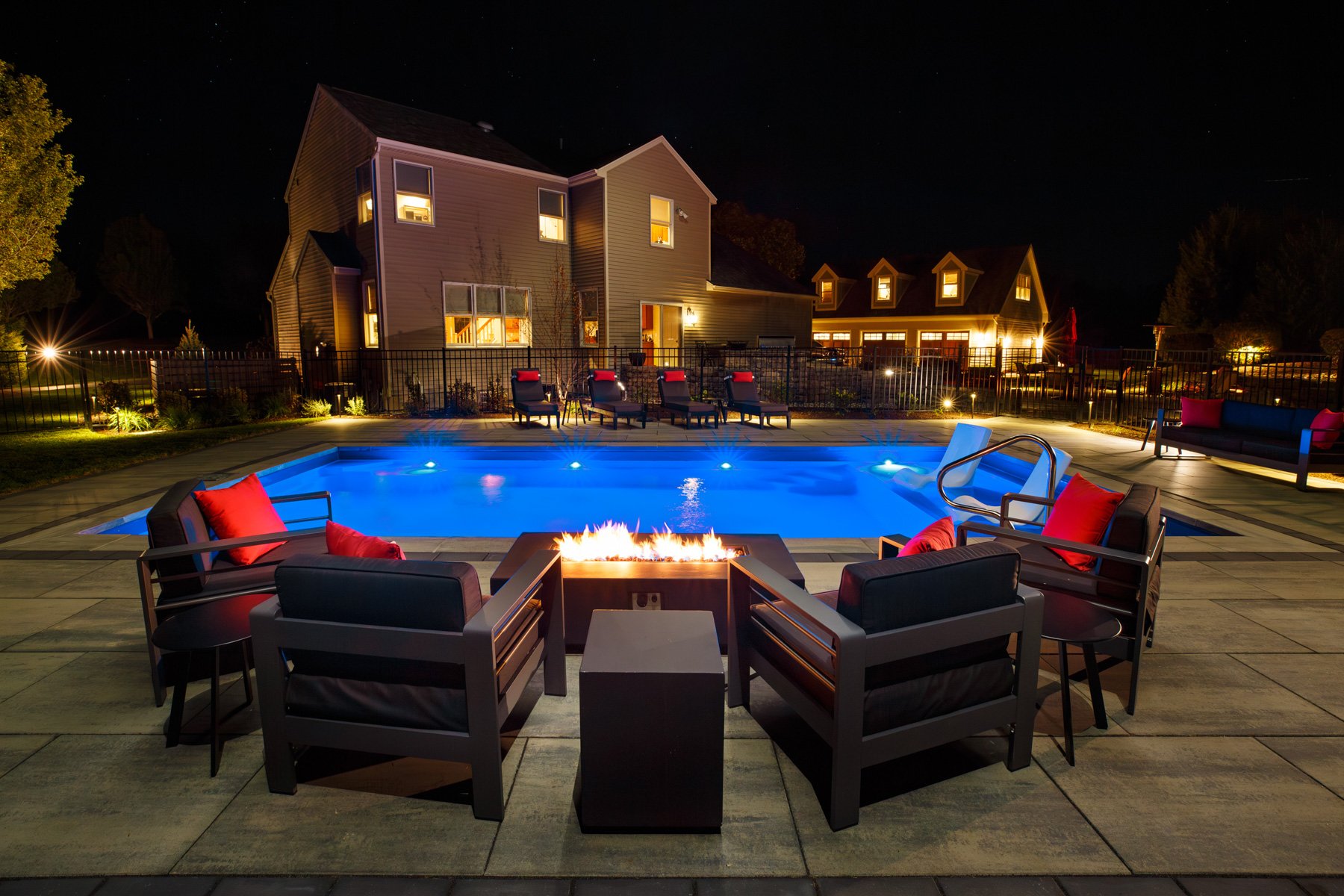
Depending on the system, you can:
-
Create lighting schedules
-
Adjust brightness levels
-
Turn lighting on remotely
-
Group fixtures into different zones
-
Program seasonal schedules
-
Integrate lighting with broader smart home systems
Imagine arriving home after dark to find your driveway, front entry, patio, and garden already illuminated for you without having to set a timer. Or picture adjusting the lighting for an outdoor dinner party without ever leaving your guests at the table.
Smart controls also improve energy efficiency by ensuring lights operate only when needed.
As technology continues to evolve, these systems offer homeowners greater flexibility without sacrificing the timeless beauty of professionally designed lighting.
Professional Landscape Lighting vs. DIY Outdoor Lighting
By now, you probably understand that professional lighting takes a certain knack, skill, and expertise to get just right.
On the other hand, it seems painfully easy to find inexpensive DIY solar lights or big-box lighting kits – things you could put together yourself.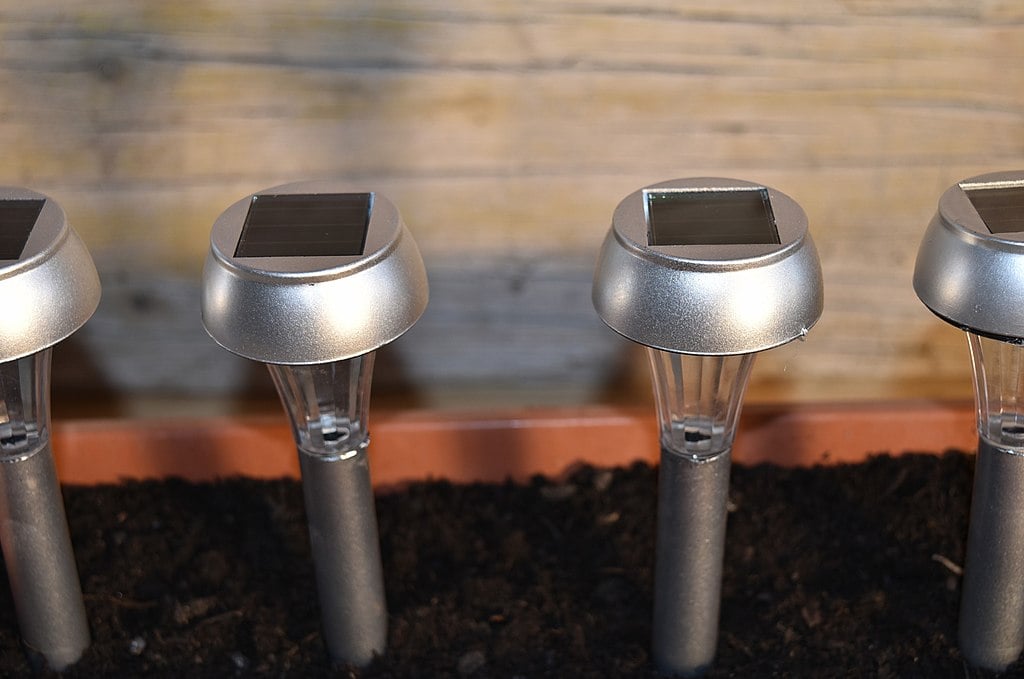
Importantly, there's a significant difference between placing fixtures around your yard and creating a professionally designed lighting system.
While DIY solutions may work for temporary applications, they often fall short in terms of appearance, durability, and long-term performance.
Lighting Design Really Does Make All the Difference
We understand this might sound biased coming from us – we are a professional landscape design team, after all – but the biggest advantage of working with a professional is the design process.
Experienced designers understand how light interacts with architecture, stone, water, trees, and planting beds. They know:
-
Where to create contrast
-
How to establish focal points
-
How to achieve a balanced nighttime appearance without over-lighting the property
That expertise simply can't be replicated by installing fixtures at equal intervals throughout the yard – it takes years of training and experience (and lots of time!) to get this right.
Professional-Grade Fixtures Mean Better Performance
Professional systems are supposed to be built to last. Premium fixtures are designed to withstand several years of exposure to rain, snow, ice, freeze-thaw cycles, and seasonal temperature changes (all common throughout the Capital Region).
High-quality LED landscape lighting also offers amazing energy efficiency while providing consistent performance and long service life.
When you compare that to inexpensive fixtures, you get cheap things that often fade, corrode, shift out of position, or require frequent replacement (making them not-so-cheap in the long run). Many of the premium brands we install also include a robust warranty for replacements on parts.
Professional Installation Protects Your Investment
Professional landscape lighting installation involves much more than burying wire. Installers carefully account for transformer sizing, voltage distribution, fixture placement, drainage, and future landscape growth to ensure the system performs reliably for years to come.
At the end of the day, this is electrician work – a professional should be handling it.
As a bonus, a professionally installed system is also easier to maintain, expand, and adjust as your landscape evolves.
If the idea of hiring a landscaping contractor intimidates you, we can tell you that asking the right questions makes all the difference. (Good news: we've got a blog about the questions you should ask before hiring a landscape lighting contractor).

What to Expect During a Professional Landscape Lighting Installation
We know that we've made this sound like a complicated process. And it's true, the actual design, strategy, and install can be. But the benefit of working with a professional team is that you don't have to deal with anything complicated.
In fact, many homeowners are pleasantly surprised by how straightforward the installation process can be.
At Gallivan, we start every project by understanding how you want to use your outdoor space.
Here's a peek at what our process looks like for professionally designed and installed landscape lighting:
-
Initial Consultation: Your design team evaluates the property, discusses your goals, identifies key landscape features, and learns how your family uses the space.
-
Lighting Design: A customized lighting plan is developed to complement your home's architecture, existing landscape, and outdoor living areas while balancing beauty, safety, and functionality.
-
Fixture Selection: Every fixture is chosen for both performance and aesthetics so that it complements the overall character of your property.
-
Professional Install: Fixtures, wiring, transformers, and controls are installed with care to minimize disruption to your existing landscape.
-
Fine-Tuning & Final Walkthrough: Small adjustments can make a remarkable difference in the finished result. Before the project is complete, you'll walk the property with your team to review the lighting design, make any final refinements, and learn how to operate and maintain your new system.
Landscape Lighting Costs: What Really Impacts the Investment?
One of the first questions homeowners ask is, understandably, "How much does landscape lighting cost?"
We can't give a one-size-fits-all answer. Like most things in landscaping, it will totally depend on your property's size, the complexity of the design, the issues we might face, and the goals of the project.
Rather than thinking of landscape lighting as purchasing individual fixtures, it's helpful to think of it as investing in a professionally designed system that enhances the beauty, safety, and functionality of your home for years to come.
Every project is unique, like we said, but several similar factors will likely influence the overall investment.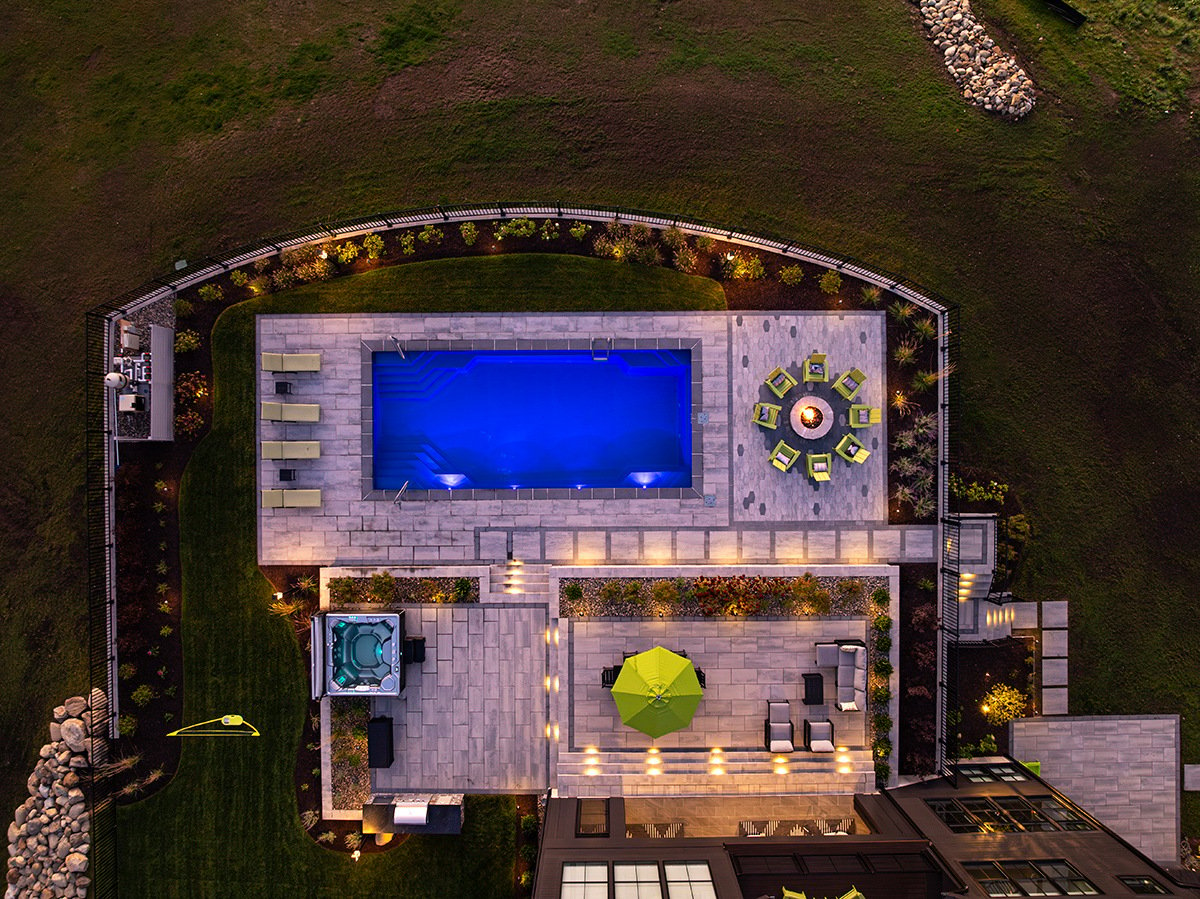
The Size and Scope of the Project
A simple front entry lighting project will naturally require fewer fixtures than illuminating an entire estate property with multiple outdoor living areas. Some homeowners want to highlight only the home's architecture and front walkway; others choose to incorporate lighting throughout the entire property, like:
-
Front and backyard landscapes
-
Driveways
-
Garden paths
-
Patios
-
Outdoor kitchens
-
Fire features
-
Pools
-
Water features
-
Mature trees
-
Garden beds
-
Outdoor gathering spaces
The general rule of thumb is the larger the area being illuminated, the more planning, fixtures, and installation work will be required. Longer wire runs and light quantities also require the upsizing of certain aspects of the system, further adding to the price.
Fixture Quality Makes a Difference
As you might expect, not all landscape lighting fixtures are created equal.
Professional-grade fixtures are designed to withstand years of exposure to rain, snow, freezing temperatures, UV rays, and changing weather conditions without corroding or failing prematurely.
Higher-quality materials (think solid brass, copper, or powder-coated fixtures) often provide greater durability and maintain their appearance over time.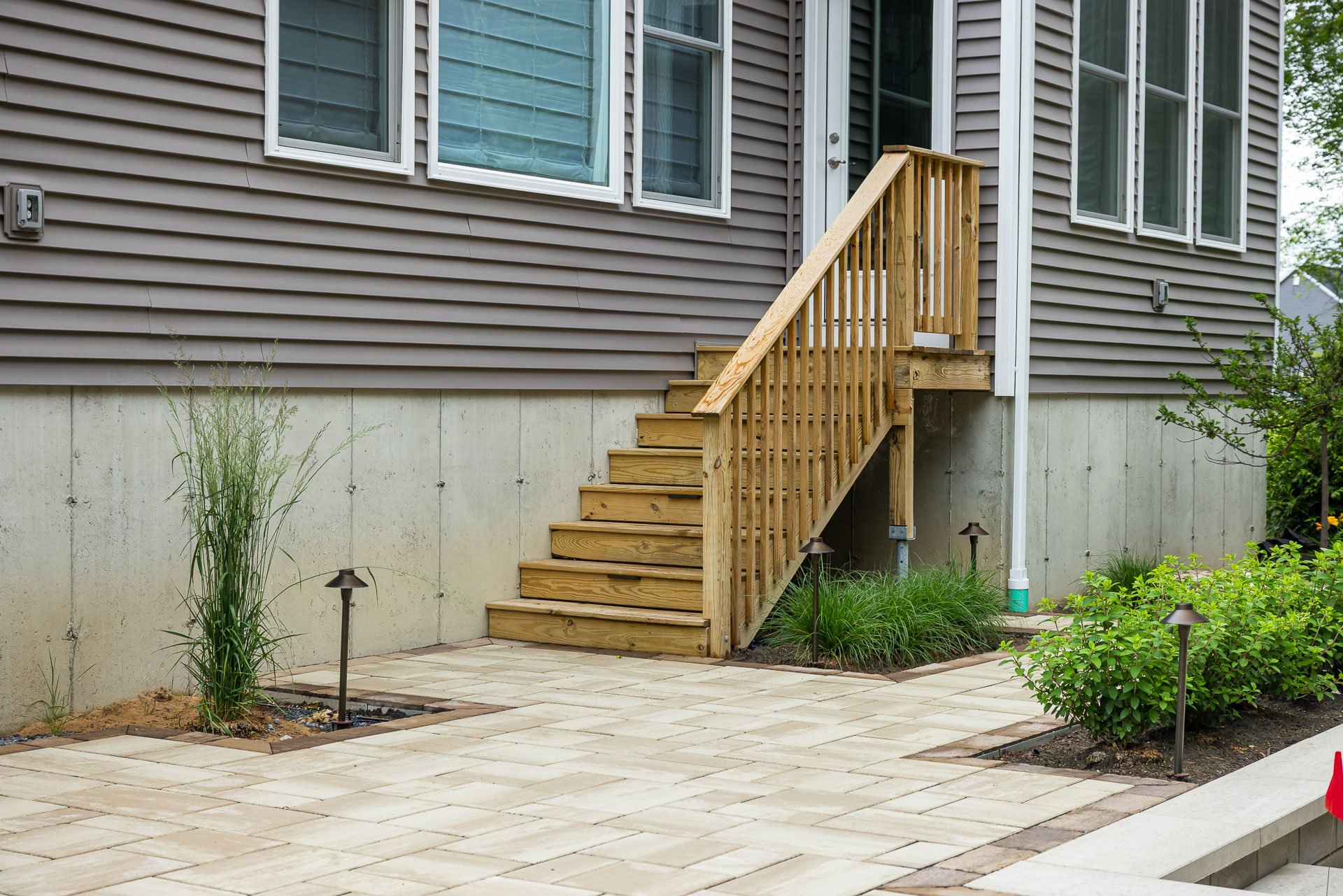
Combined with energy-efficient LED landscape lighting, these systems require fewer replacements and lower long-term operating costs than inexpensive alternatives. But they also come with a higher up-front cost.
Smart Controls and Custom Features
The more tech you incorporate, the more expensive it might be. Increasingly, our customers are opting for smart landscape lighting because it offers convenience and flexibility.
Features that may influence project costs could include:
-
Smartphone control
-
Automated schedules
-
Multiple lighting zones
-
Dimming and color-changing capabilities
-
Integration with other smart home systems
While these technologies increase the overall price, they also make managing your lighting system significantly easier and more functional throughout the year.
Existing Landscape vs. New Construction
Lighting can absolutely be added to an established landscape, but installation may be more straightforward when incorporated into a larger landscape design-build project.
When lighting is planned alongside patios, retaining walls, planting beds, pools, or outdoor kitchens, wiring and fixture placement can often be integrated more seamlessly into the construction process.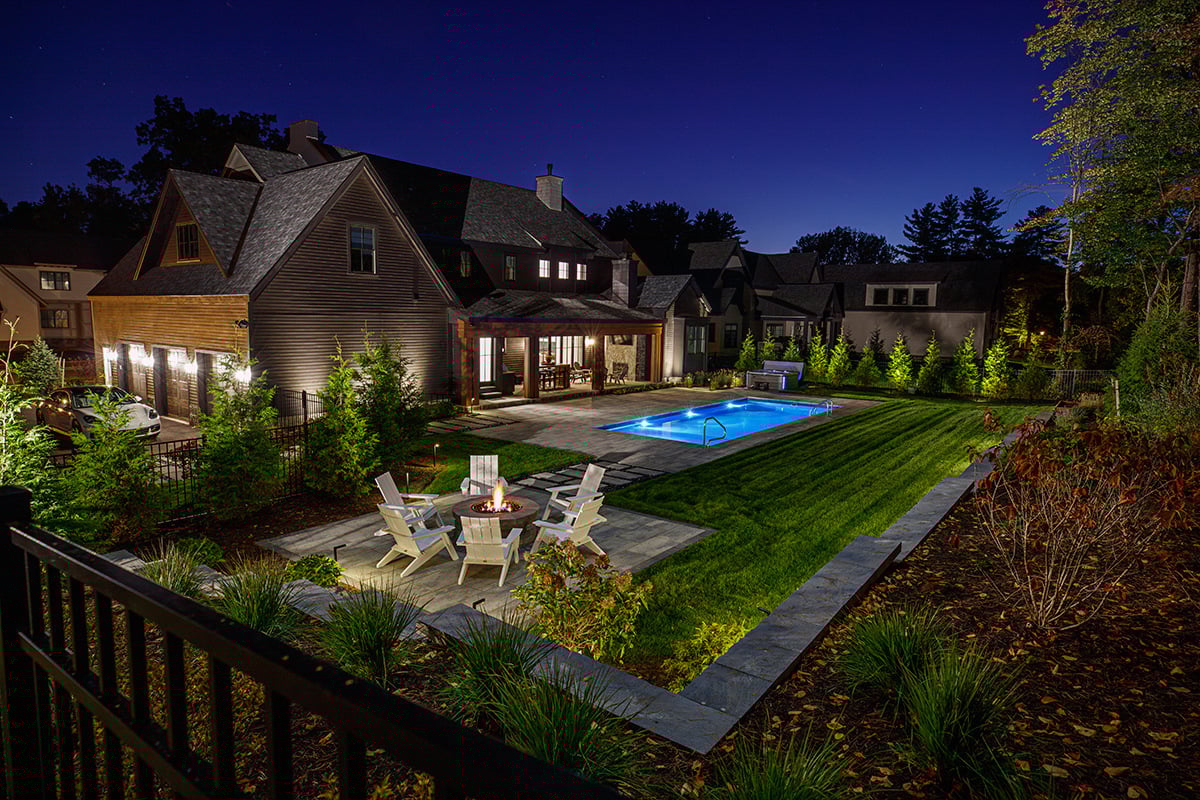
That said, experienced professionals who do this regularly should be able to successfully retrofit lighting into existing landscapes while minimizing disruption to lawns and planting beds.
Long-Term Value Over Short-Term Savings
It's understandable to compare professional lighting with inexpensive DIY alternatives, but it's important to consider the total value rather than simply the initial, upfront price.
A professionally designed system provides:
-
Better aesthetics
-
Longer-lasting fixtures
-
Greater energy efficiency
-
Improved durability
-
Professional installation
-
Easier maintenance
- Expandability as your landscape evolves
Instead of replacing low-quality fixtures every few years, homeowners benefit from a lighting system designed to perform beautifully for the long term. And besides, those yearly fixes add up – they could cost you more than the higher-quality pieces in the long run.

Maintaining Landscape Lighting in New York's Capital Region
One big advantage of investing in professional landscape lighting is that maintenance requirements are typically minimal. But, like any outdoor feature, a lighting system benefits from occasional attention to keep it looking its best and performing its best.
Obviously, in our neck of the woods in the Capital Region, changing seasons bring unique considerations that homeowners should keep in mind.
Plan Ahead for Every Season
Think about it this way: landscape lighting is a four-season investment.
During spring and summer, it highlights fresh blooms, lush lawns, and outdoor entertaining spaces. In autumn, it showcases colorful foliage and extends outdoor enjoyment even as daylight hours become shorter. During winter, lighting creates warmth and visual interest when snow blankets the landscape and nights arrive early.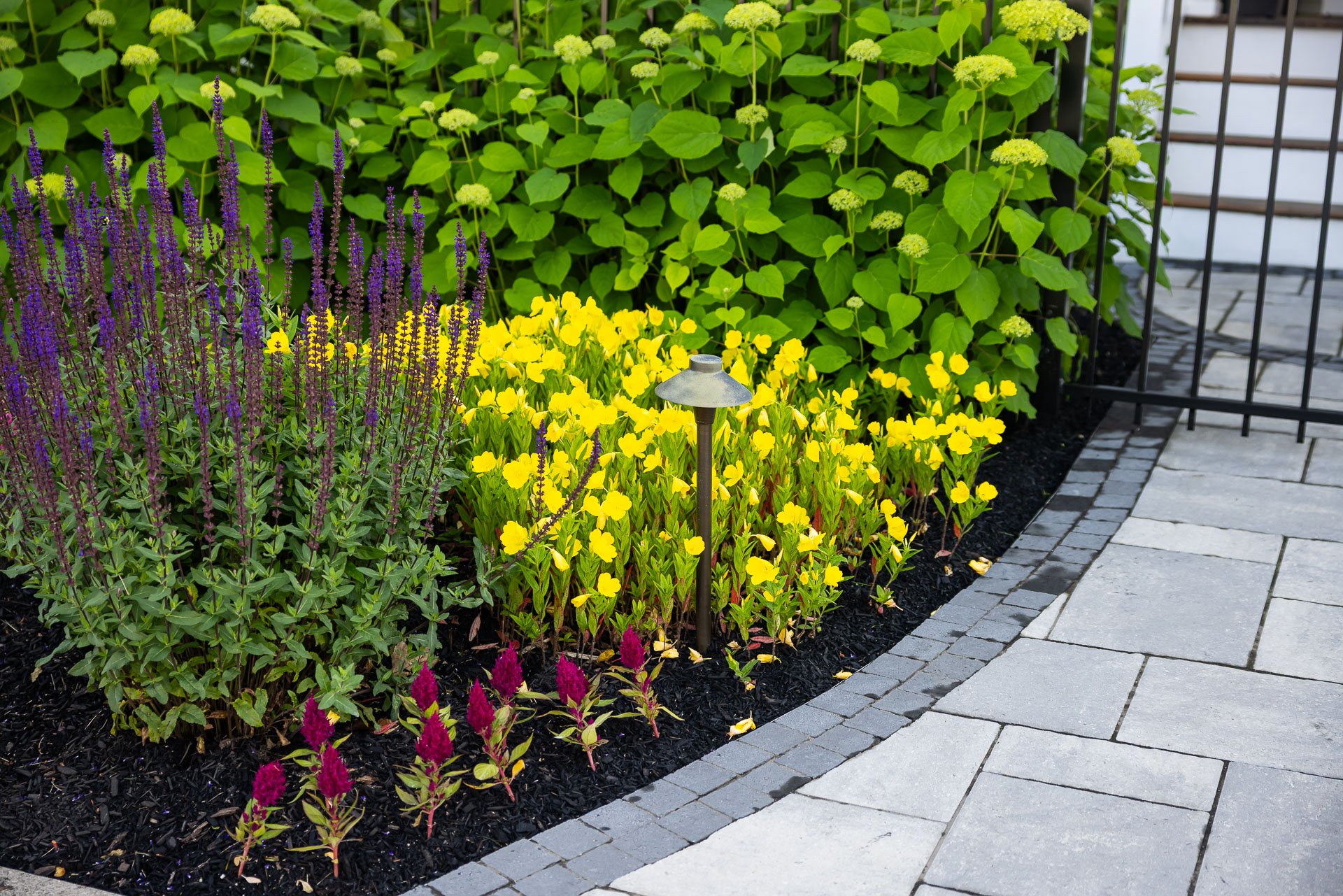
Because Upstate New York experiences dramatic seasonal changes, professionally installed systems should be designed with durability in mind.
You Should Keep Fixtures Clean
Over time, mulch, dirt, leaves, and grass clippings can accumulate around fixtures. An occasional inspection helps ensure lights remain unobstructed and continue producing their intended beam pattern.
Cleaning lenses periodically also helps maximize brightness and preserve the lighting design. Whether you tackle this or your go-to landscape maintenance team takes care of it, this should be on the seasonal to-do list.
Adjust Lighting as Your Landscape Grows
Landscapes are constantly changing – trees get older, shrubs thicken, and perennial gardens evolve.
As your plants grow, they may block or redirect light that was originally aimed at a focal point. Periodic adjustments (by your go-to landscape team or by you) help maintain the balance and visual impact of the original design.
This is one reason many homeowners appreciate working with a full-service landscape company that understands both lighting and plant growth – this can be taken into account from the very start of your landscape lighting investment!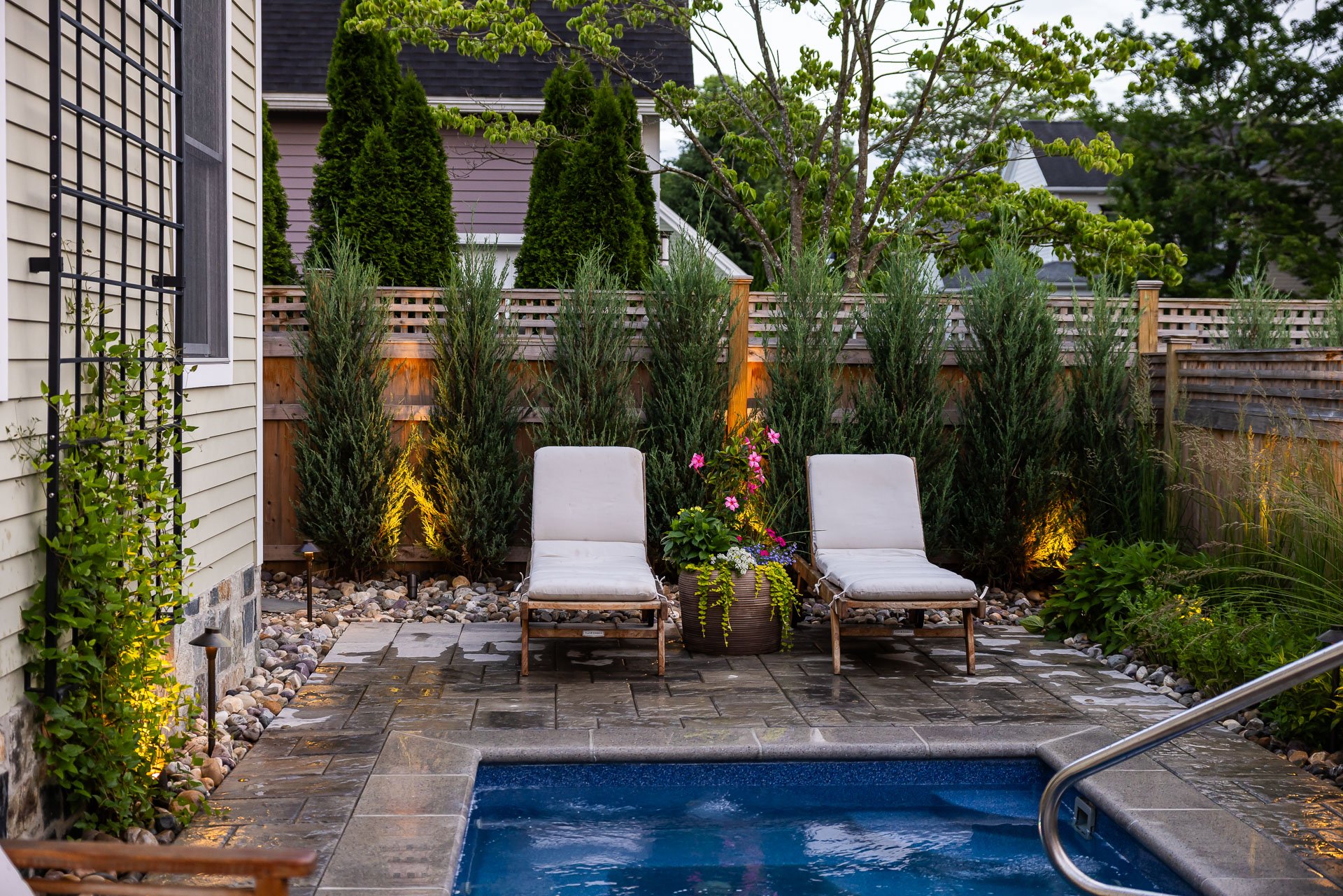
Prepare for Winter Conditions
Obviously, New York winters bring snow, ice, and repeated freeze-thaw cycles.
Professionally installed fixtures are designed to withstand these conditions. And if they're done right, they should. That said, anything can happen, and weather patterns are unpredictable.
Seasonal inspections can help identify fixtures that may need repositioning after snow removal or ground movement, or wiring issues due to water seeping into connections. Before winter arrives, it's also a good idea to ensure fixtures remain visible above heavy mulch or fallen leaves.
How to Choose the Right Professional Landscape Lighting Company
The right contractor will understand everything we've talked about in this guide. They'll know the ins and outs of landscape lighting in general, how lighting interacts with architecture, plantings, and natural stone, and they will be absolutely sure to start with an audit of how you plan to use your space.
As you compare landscape lighting services and decide who to hire, we highly encourage you to consider and think about these important factors.
- Years of Experience With Luxury Residential Properties
-
A Thoughtful Design Process
- Use of High-Quality Materials
- Clear & Transparent Communication
- Full-Service Design-Build Expertise
Frequently Asked Questions About Landscape Lighting
How much does professional landscape lighting cost in the New York Capital Region?
There's no clear-cut answer we can provide without doing a full consultation. The investment depends on the size of your property, the number of fixtures, fixture quality, lighting controls, and the complexity of the installation. Every project is customized to the homeowner's goals and landscape. The best guidance we can provide is somewhere in the range of $1000 - $10,000 is a good starting point to keep in mind.
When is the best time to install outdoor lighting in Upstate New York?
Landscape lighting can be installed during almost any season, but many homeowners choose to add it during a larger landscape renovation or before peak outdoor entertaining months. Planning ahead also ensures your lighting is ready to enjoy during the shorter days of fall and winter.
Can landscape lighting be added to an existing patio, pool, or garden?
Of course! Professional lighting systems can often be integrated into existing landscapes with minimal disruption. And a team that knows what they're doing will know how to retrofit and design a space so it feels like it was intentional from the start.
Should landscape lighting be installed during a larger landscape project?
If you can do that, great. Incorporating lighting into the initial design allows fixtures, wiring, and other components to be integrated more seamlessly with patios, walkways, retaining walls, pools, and planting beds. It also tends to save you money, as installing things after the fact can lead to more labor costs. That said, you absolutely don't have to time it this way.
What type of lighting is best for patios and outdoor kitchens?
Layered lighting typically provides the best results, but it's hard to give a clear answer without seeing the space itself. A combination of task lighting for cooking areas, ambient lighting for seating, and accent lighting for surrounding landscape features creates a comfortable, functional environment.
What type of lighting is best around pools?
Pool lighting should enhance both safety and ambiance. Underwater lighting, surrounding pathway lights, and accent lighting for nearby landscaping work together to create a beautiful nighttime environment. Every pool project is different, though.
Are LED landscape lights a good option?
Yes, they are by far the best option. LED fixtures are energy-efficient, long-lasting, and provide consistent illumination while requiring less maintenance than older lighting technologies.
Can I control my landscape lighting from my phone?
It depends on the type of system you invest in! Many modern systems include smart controls that allow homeowners to adjust schedules, brightness, and lighting zones using a smartphone or tablet. If this feature is important to you, make sure you mention it early on in the process.
How much maintenance does landscape lighting require?
Professional systems should require relatively little maintenance. Occasional cleaning, seasonal inspections, and minor fixture adjustments as plants mature are typically all that's needed.
Working With Gallivan to Transform Your Landscape Into a Space You'll Enjoy Day and Night
We truly believe a beautifully designed landscape shouldn't disappear just because the sun goes down.
With professionally designed landscape lighting, your Capital Region home becomes more inviting, your outdoor living spaces become more functional, and your property takes on an entirely new character after dark.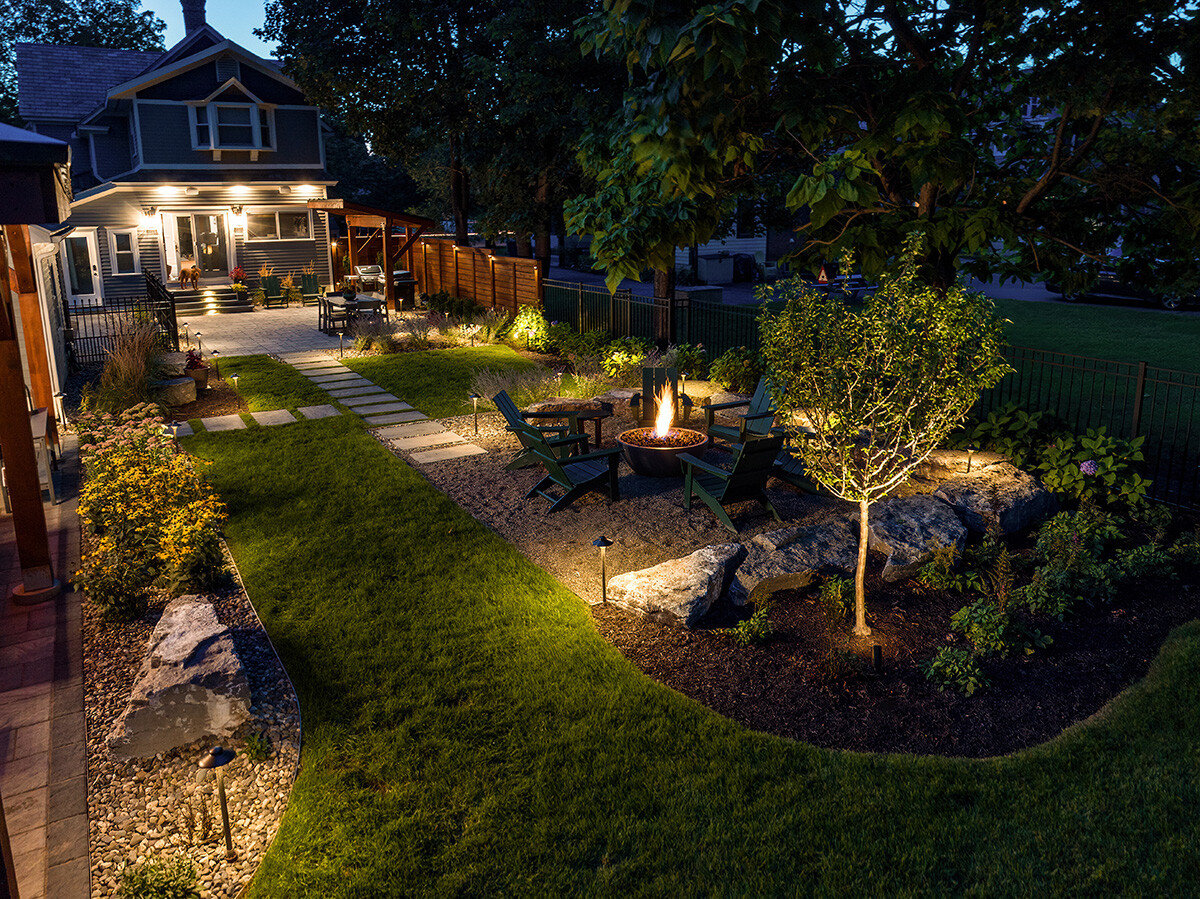
At Gallivan, we believe landscape lighting is most effective when it's thoughtfully integrated into the overall design of your property. Our team considers every detail (from your home's architecture to planting design and seasonal changes) to create a lighting system that feels seamless, looks elegant, and, above all, is built to last.
Whether you're planning a complete outdoor renovation or looking to enhance an existing landscape, we're here to help you bring your vision to life.
Ready to see your property in a whole new light? Fill out our consultation form today to schedule a consultation with our team.

Image Sources: solar lights