
Written by: Carl Trinkle
14 min read
In this part of the country, your backyard looks different from one season to the next.
March might be marked by watching the snow slowly melt off the patio, but come July you’re extending every dinner party on the deck to soak in the summer sun. Fall arrives and the trees put on a dazzling show with changing leaves, but soon after the harsh realities of a long, cold winter are descending.
That’s just life in the Capital Region, right?
Despite the extreme pendulum swing of the year, it’s your goal to have a beautiful, balanced yard no matter what the seasons bring.
That’s where thoughtfully and expertly blending plants and hardscape can do the trick.
That's part of what makes landscaping in Upstate New York so rewarding, but also why it takes some expert planning to get it just right.
A successful landscape here needs to work through our wet springs, hot summers, beautiful falls, and long (sometimes far too long) winters.
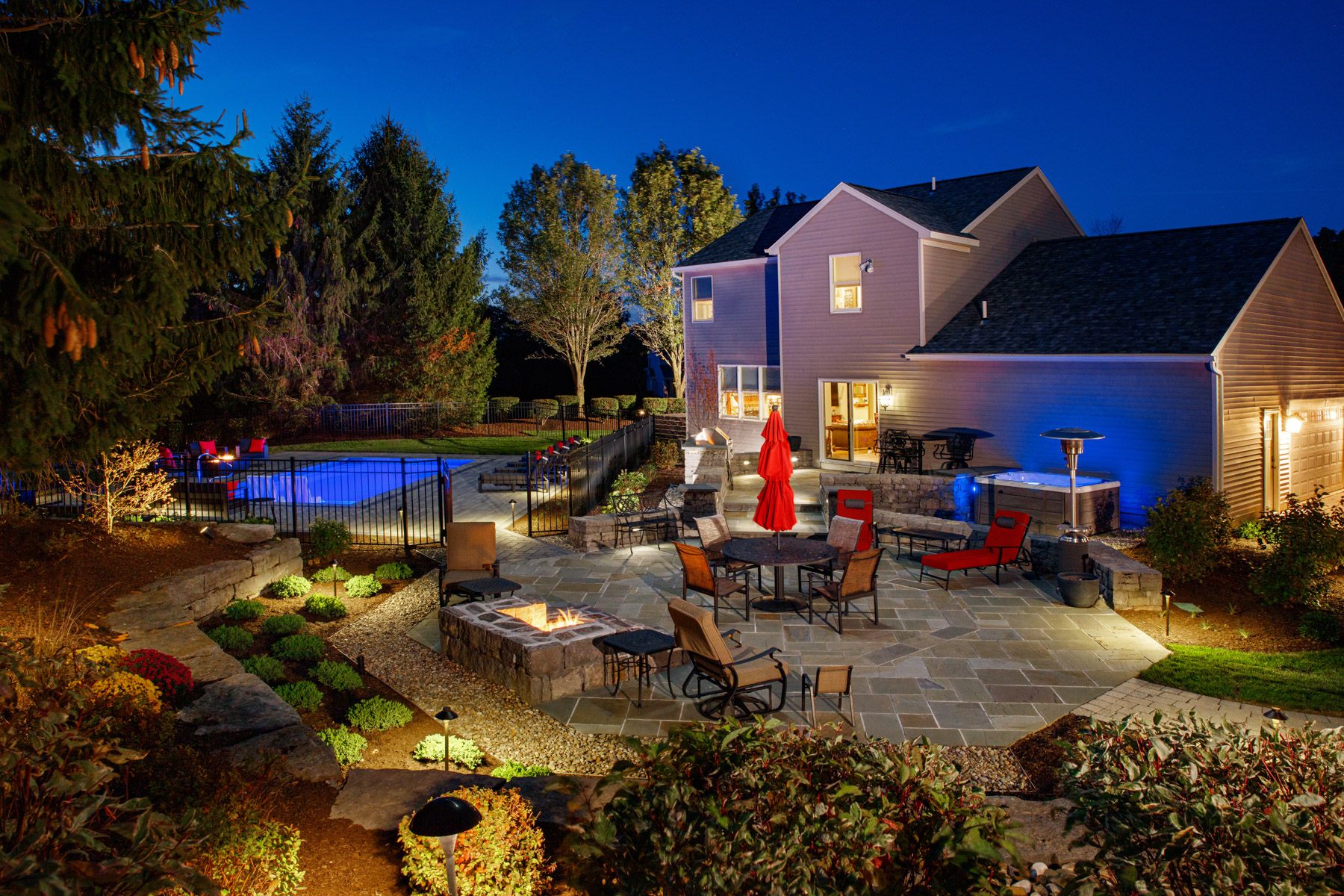
When you're combining hardscape elements such as patios, walkways, retaining walls, and outdoor kitchens with the right kind of plantings, those two pieces need to work together, but also be designed with all four seasons in mind.
Need some insight on how to approach this combination? This blog will walk you through our expert ideas as well as explain how a thoughtful landscape plan can make all the difference.
Jump To:
Why Hardscapes & Plantings Should Be Designed Together
How to Choose Hardscape Elements for Your Backyard
Patio Landscape Design Ideas That Look & Feel Natural
A Few Patio Border Planting Ideas for the Capital Region
Landscaping Strategies for Full, Four-Season Interest
Common Hardscape & Planting Mistakes
Does Professional Design Matter?
Frequently Asked Questions
Work With a Professional to Bring Hardscape and Planting Together
The Basics: Why Hardscapes & Plantings Should Be Designed Together
When it comes to landscape, most people’s brains immediately jump to the flashy flora and fauna. But a successful – and balanced – landscape requires a blend of both plants and hardscapes.
Hardscaping is the glue that provides the structure of an outdoor space, while planting softens that structure to connect it all to the natural landscape.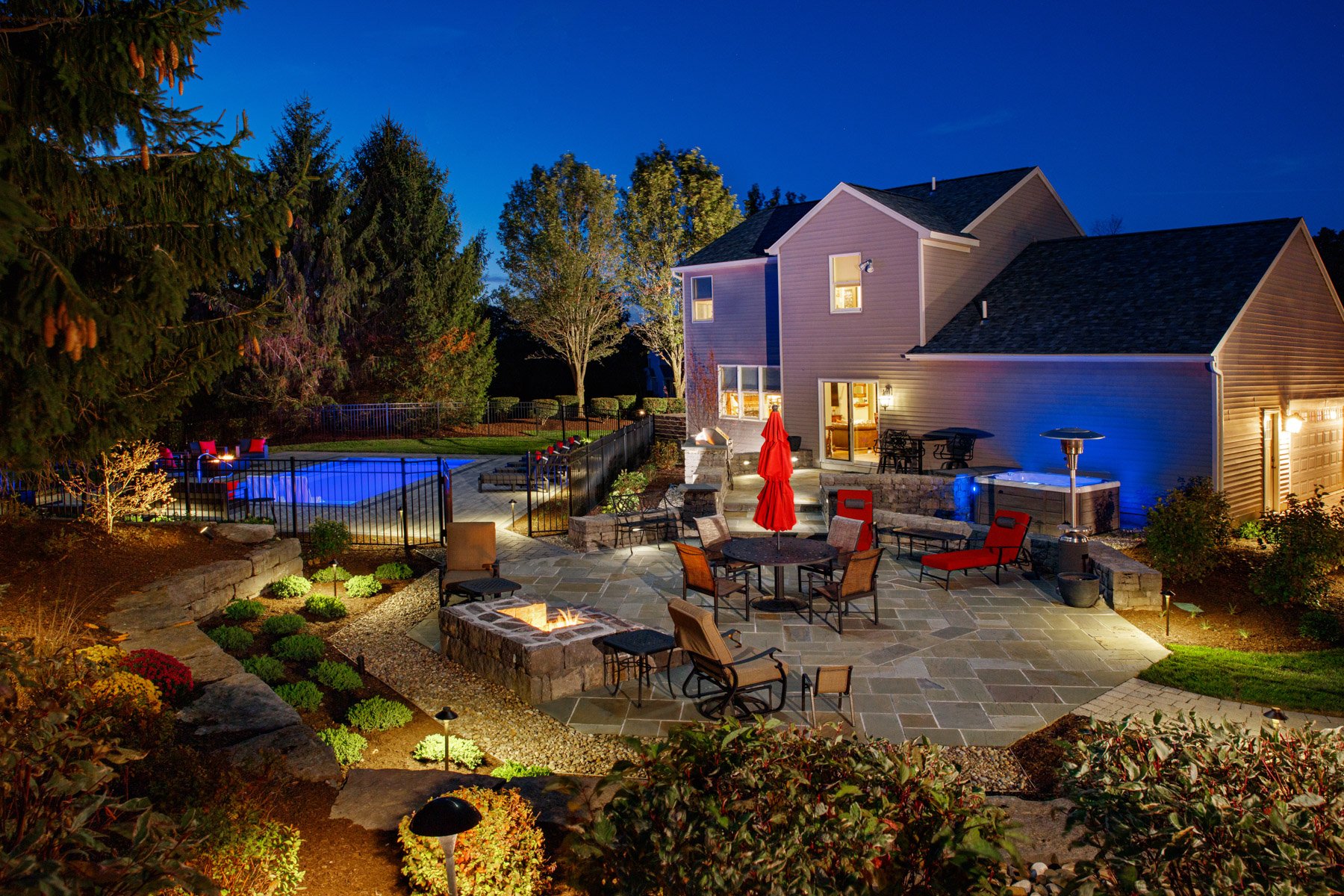
In almost every scenario, your space can greatly benefit from both.
A large stone patio might give you the perfect place for outdoor dining, but without planting around it, it can feel like a big, hard, and sterile surface dropped into the middle of the backyard.
On the flip side, a beautiful planting bed looks great in theory, but it isn't going to solve a patio that was poorly positioned or doesn't connect naturally to the rest of the property.
That’s why both should be considered together from the beginning of a landscape project.
In most cases, that means thinking about more than where you want the patio. A good landscape plan considers elements like:
- how you'll move between the house and outdoor living areas
- what you'll see from inside the home
- where you want (and need) privacy
- where mature trees cast shade
- how the landscape will look when the leaves are gone, and the plants are dormant
In the Capital Region, we spend several months looking at landscapes without their summer foliage. When the trees are bare and the perennial garden has gone dormant, your patio, walls, walkways, evergreens, ornamental trees, and other permanent elements become much more prominent.
A landscape that was designed with only summer in mind can feel surprisingly empty in January, whereas a landscape designed for the full year feels special, balanced, and “on-purpose” in every season.
How to Choose Hardscape Elements for Your Backyard
There are endless hardscape options available, but the right hardscape elements depend on how you want to use the property and your particular taste. A patio designed for quiet family dinners will have different needs than a large entertaining space with an outdoor kitchen and fire.
The important thing is to think about the relationship between each feature and the goals of that feature.
Patios
A patio is usually the starting point for an outdoor living area, so its size, shape, material, and location should work with the architecture of the home and the way you actually use your backyard.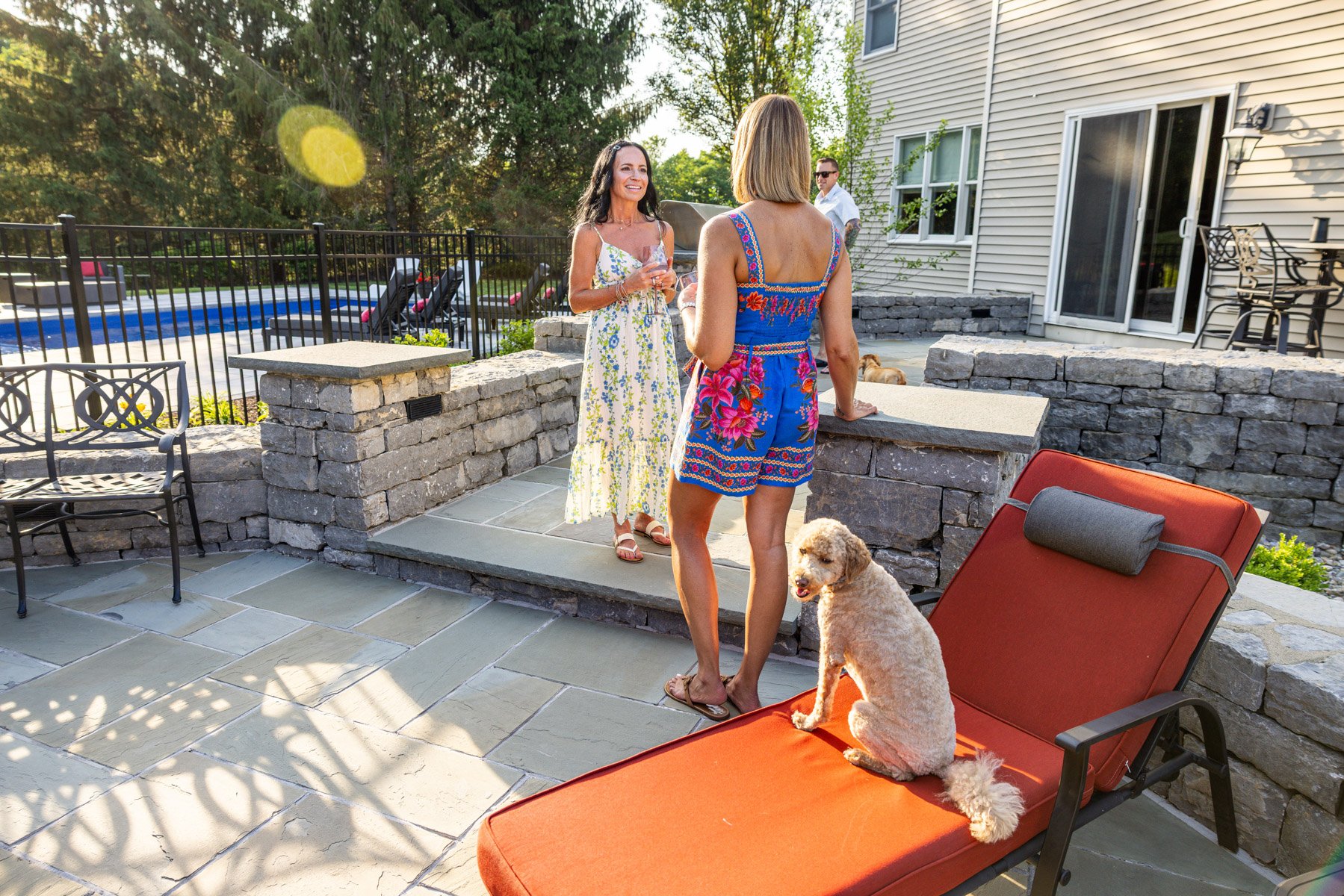
Think about this hypothetical: A patio positioned immediately outside the kitchen may make sense for entertaining, but won’t act as a quiet sanctuary. A patio in another part of the yard could be better suited to a quieter seating area around a fire pit, but might be a more disjointed flow when used for entertaining guests.
At the same time, the planting around the patio should be considered, too. Instead of creating a hard line between patio and lawn, planting beds can help transition one space into the next, even altering the flow of the entire space in some cases.
Walkways
Walkways create the connections between different parts of your property – that matters for flow and usage, but also for safety and liability.
A well-designed walkway might lead from the back door to the patio, connect the patio to a garden, or create a path toward a pool or fire feature.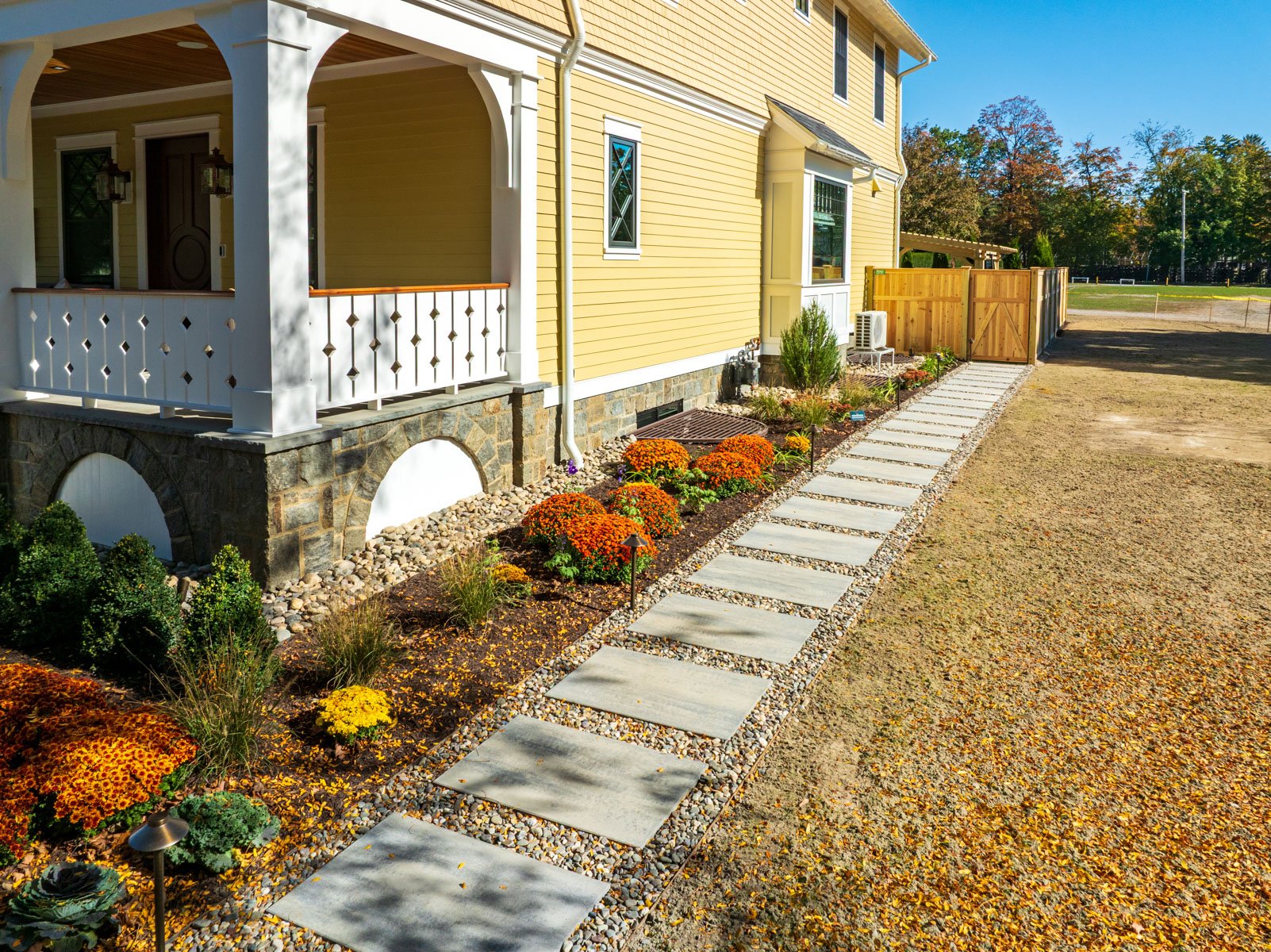
But in a Capital Region landscape, it's also worth thinking about how that walkway will function outside of the summer months. You’ll need to consider things like:
- Where will snow be cleared?
- Where will water go during spring thaw?
- Will the path still be comfortable and accessible when the surrounding landscape is dormant?
These aren't particularly glamorous questions, and they aren’t necessarily an exciting part of design, but they are the kinds of questions that make a landscape work better in the long run.
Walls and Retaining Walls
Changes in grade are common throughout our region, and retaining walls can turn an awkward slope into a functional part of the landscape.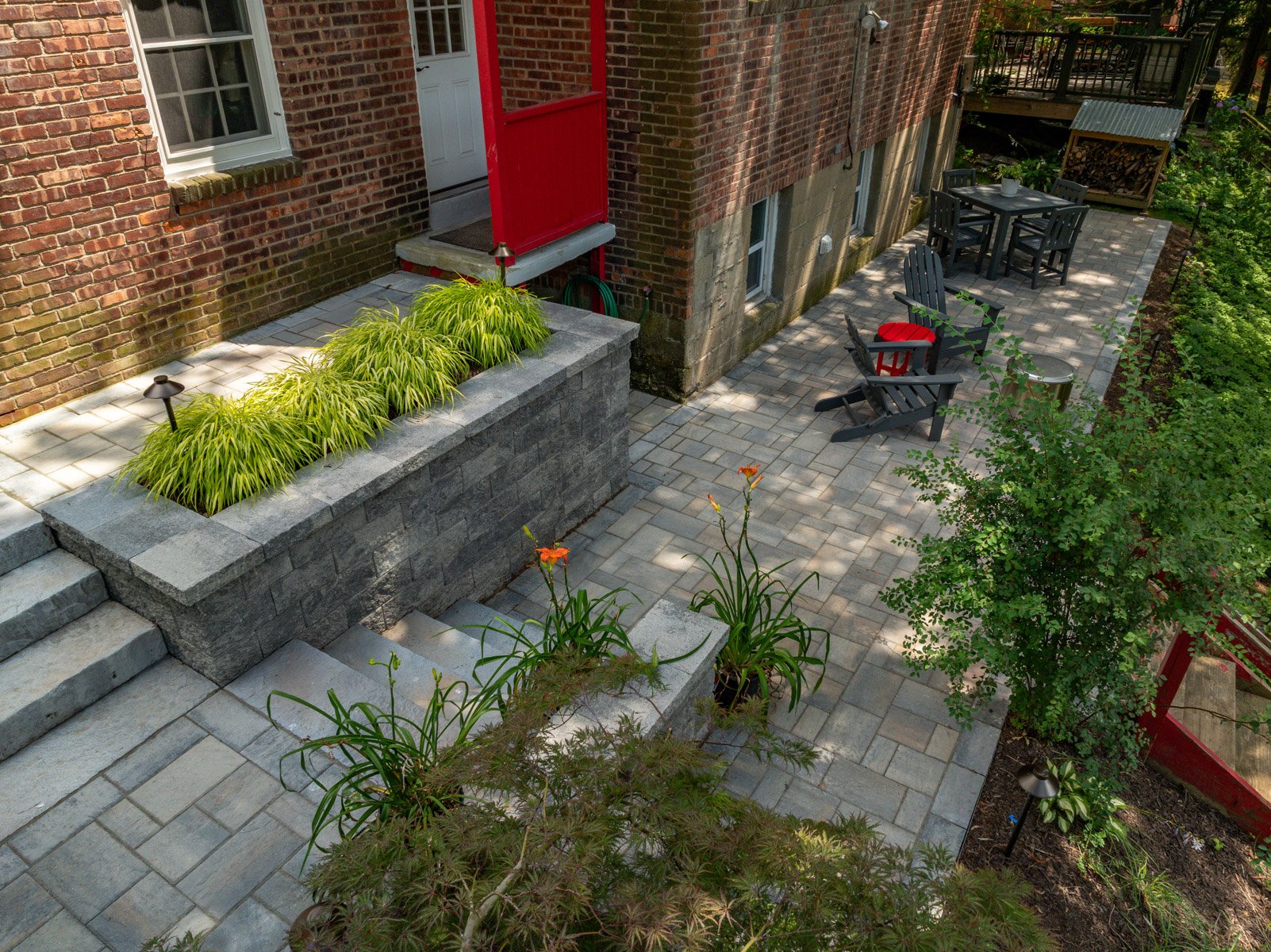
A wall can create a level patio area, define a garden, or add visual structure to a sloped backyard. But walls don't have to look sterile or cold. You can use plantings to soften the edges, frame the stone, and help the structure blend into the surrounding landscape for a more whimsical, natural look.
Fire Pits & Outdoor Kitchens
Outdoor kitchens and fire features can become natural gathering points, but without proper planning, they can feel disconnected from the rest of the yard.
Proper plantings can help define these spaces without completely enclosing them. Maybe a combination of shrubs, ornamental grasses, and perennials could create a sense of separation around a fire pit to establish a “zone,” while still keeping the area open and easy to access.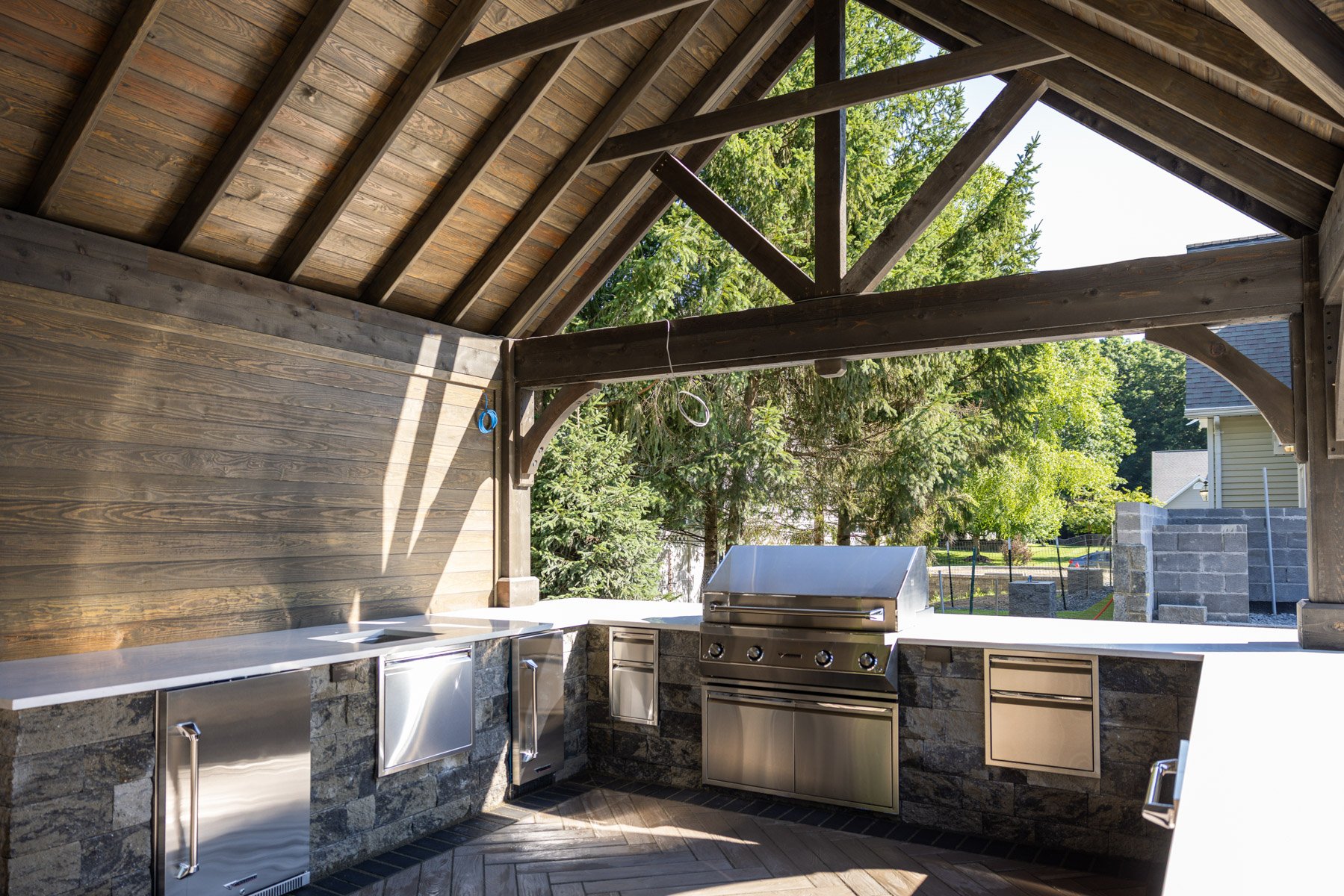
The same idea could apply to an outdoor kitchen. Planting can frame the space and make it feel like part of the landscape rather than a cold, outdoor appliance surrounded by stone. Just make sure to use appropriate spacing to avoid creating a fire hazard.
Patio Landscape Design Ideas That Look & Feel Natural
Have you ever walked out into someone’s outdoor space and felt like it was too cold and rigid? What about overgrown or chaotic? There are plenty of reasons for this, but often, it has a lot to do with the balance between hardscape and planting.
If you’re intimidated by how to blend and balance these types of elements, here are a few of our favorite techniques for creating soft and structured spaces.
Soften Straight Lines With Planting
Stone naturally creates hard edges, but planting gives you an opportunity to soften those edges.
Curved planting beds can create a more organic transition between a patio and lawn, particularly when the surrounding landscape has a natural or informal character.
That doesn't mean every patio needs a sweeping, curved garden bed, of course. The shape should still make sense with the architecture of the home and the geometry of the hardscape.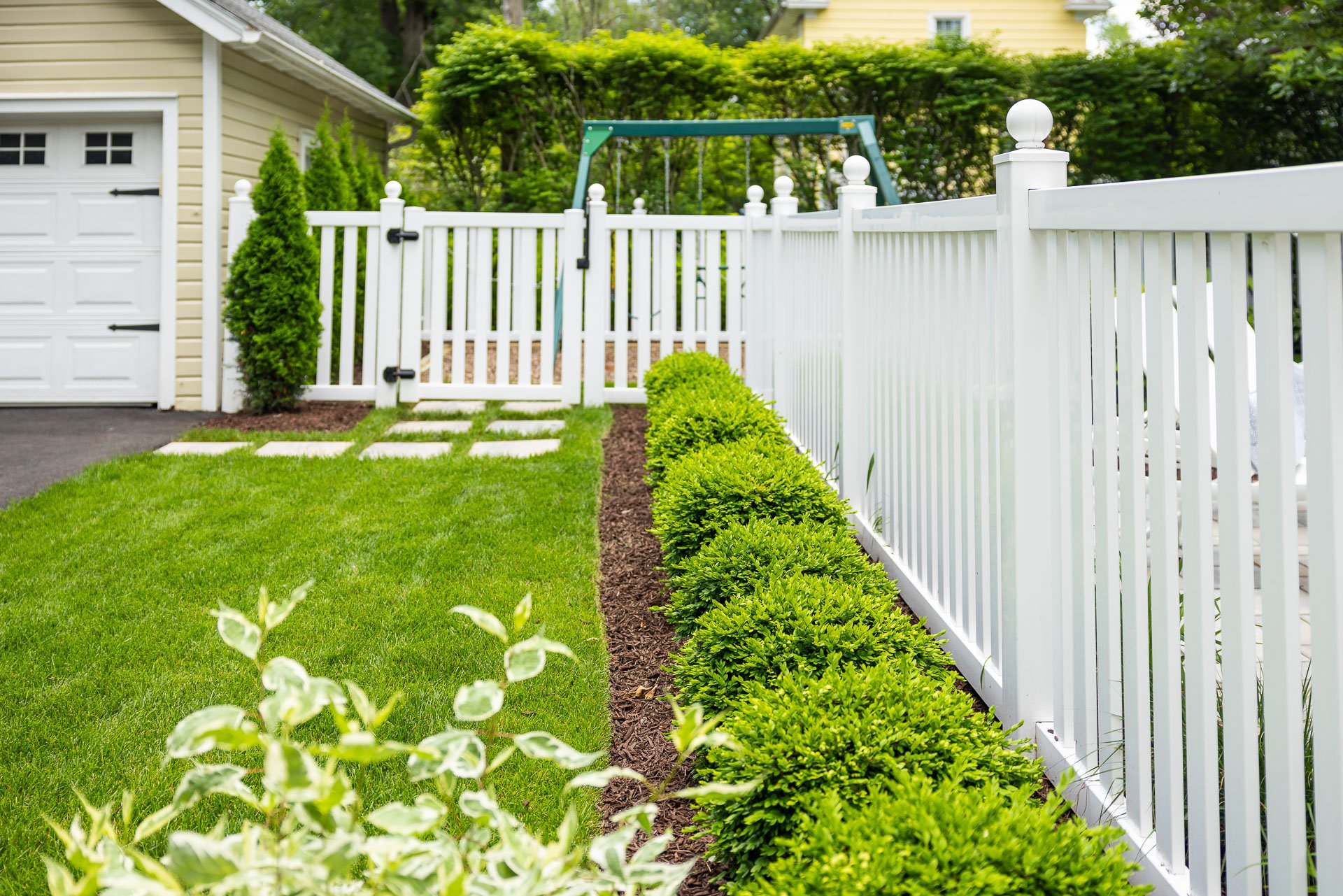
A contemporary home might make more sense with cleaner, more structured lines. A traditional Capital Region property might lend itself to softer transitions and more layered planting.
Ultimately, you don’t want to try to hide the hardscape altogether; you likely just want to soften it and create a more intentional design.
Layer Plants Around the Patio
Think about the planting beds from front to back for this technique.
- Low-growing plants can soften the immediate edge of the patio
- Perennials and ornamental grasses can add color and movement
- Shrubs can provide structure and, where appropriate, privacy
- Ornamental trees can add height and eventually provide shade
When you consider plantings in layers, it creates a much more natural transition than putting one row of identical shrubs along the patio. It also almost always gives you something to look at throughout the growing seasons.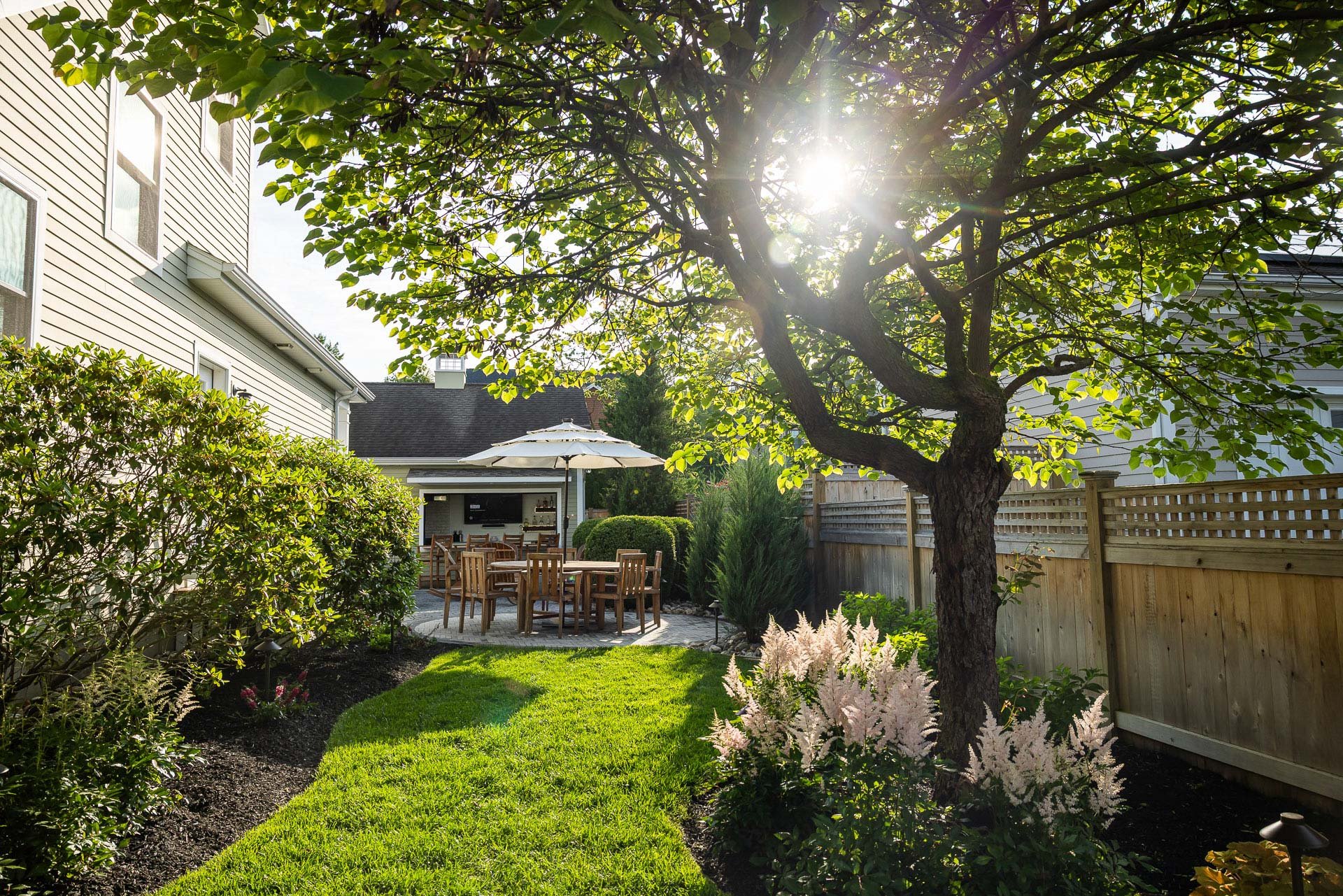
Think About Framing Views Instead of Blocking Them
One of the biggest advantages of professional landscape planning is being able to look beyond the individual planting bed and see the landscape holistically.
Maybe there's a beautiful soon-to-mature tree at the back of the property that should remain visible from the patio. Perhaps the neighbor’s house is a view you’d rather not have every day.
Thoughtful and expert plant placement can frame desirable views and screen less desirable ones without making the landscape feel enclosed.
A Few Patio Border Planting Ideas for the Capital Region
When you're choosing plants around a patio in Upstate New York, appearance is only part of the equation you need to consider.
Yes, they should look good, easily thrive in our region, and not require too much maintenance, but the plant needs to make sense for the location.
Consider factors like:
- Is the patio in full afternoon sun?
- Does the house cast shade over it?
- Does water collect nearby after a spring rain?
- Is the planting bed exposed to winter salt from a driveway or walkway?
- Are deer frequent visitors?
Those elements can either add practical, beautiful plants to your list or remove what you thought might be great additions.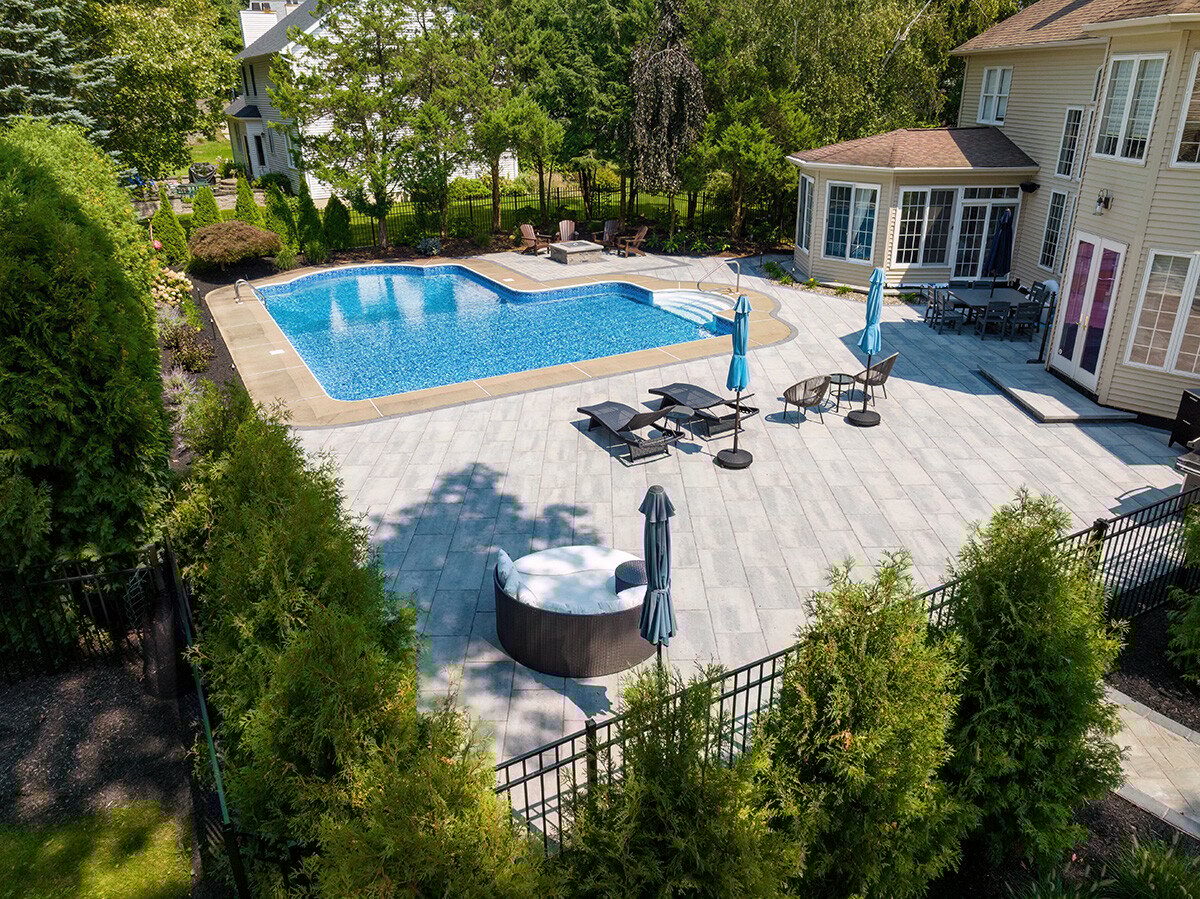
Evergreens Provide Winter Structure
Evergreens can be especially valuable around outdoor living spaces because they continue providing structure long after deciduous trees drop their leaves.
Think about January: Your flowering perennials aren't doing much no matter what type of winter we’re having. Your evergreen plantings, ornamental trees, stone walls, and other permanent landscape elements, on the other hand, are carrying much more of the visual weight.
Strategically placed evergreens can also provide year-round privacy without requiring a solid wall of plants.
Perennials: A Flash of Seasonal Color
Perennials are known to bring a lot of personality to patio planting.
Instead of trying to make everything bloom at the same time, consider plants that take turns throughout the growing season. Spring brings its own wave of growth and flowers. Summer can be filled with blooms and pollinator activity. Late summer and even fall offer another opportunity for color and texture.
That rotating interest is what keeps a planting bed from having one brief moment of glory and then fading away.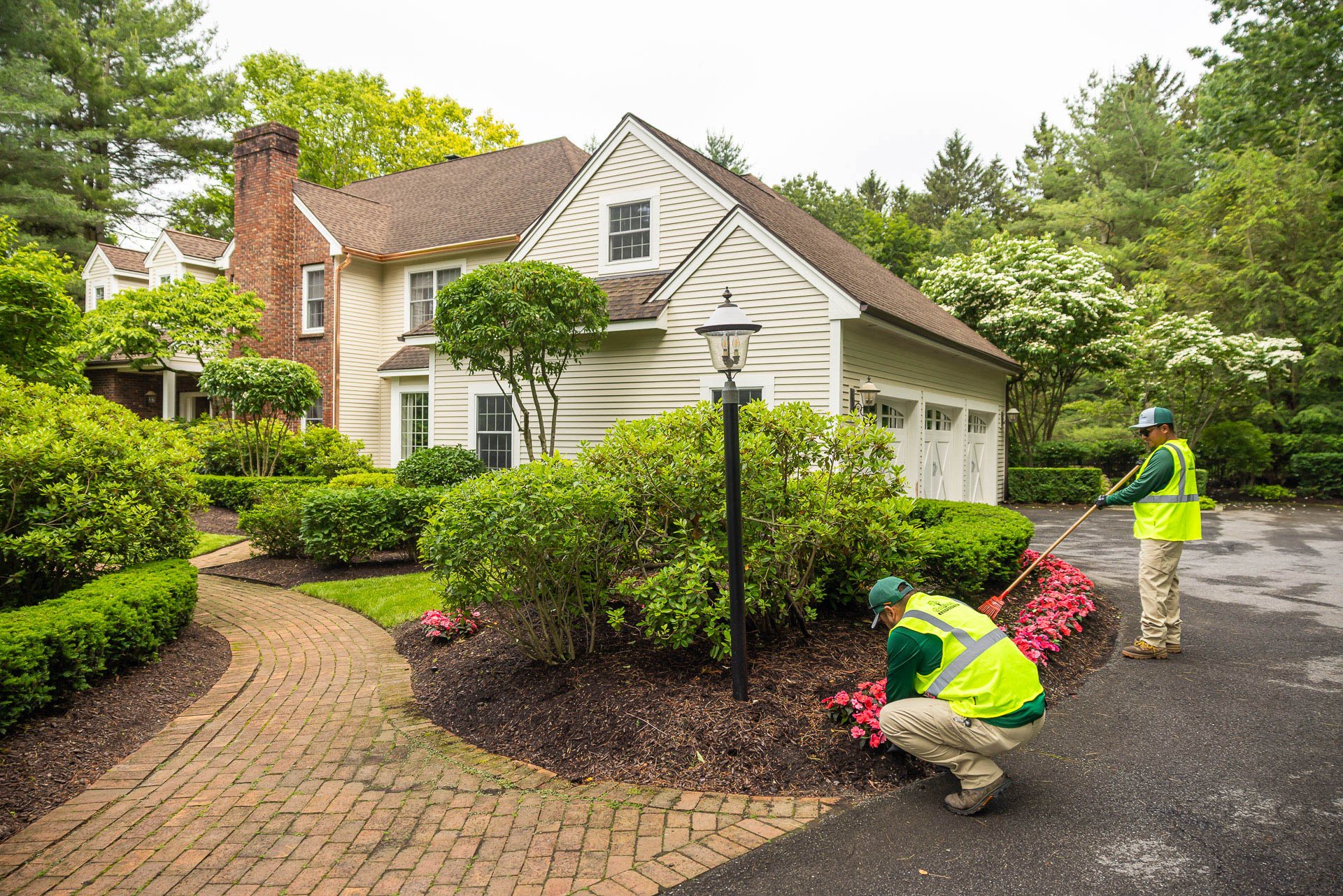
Ornamental Grasses Provide Movement
Ornamental grasses are another useful tool for softening hardscape.
Because their texture contrasts beautifully with stone and they’re not staunch, hardy plants, their movement in the breeze keeps a planting bed from feeling too still or static.
A lot of grasses will also retain interesting structure into fall and winter, which is useful in a region where we spend plenty of time looking at dormant, cold landscapes.
Think About Deer & Winter Conditions
If you've spent enough time gardening in our region, you probably don't need to be reminded that deer easily get a taste for your landscaping.
Plant selection should always account for local wildlife pressure as well as the site's sun, soil, moisture, and exposure. While there are plants labeled as “deer-resistant”, there is no truly “deer-proof” plant.
Winter conditions obviously matter, too. Plants located next to a driveway or walkway may get a full dose of salt exposure and heavy snow accumulation. It’s important to choose plants that are durable enough to deal with that reality.
A list of the “best patio plants for New York” can help you in your selection, of course, but those types of things can only take you so far. Ultimately, it’s going to depend on your specific property, its challenges, and your goals.
Landscaping Strategies for Full, Four-Season Interest
Even if your goal isn't necessarily to have a garden that's bursting with color every month of the year (which isn’t realistic in the Capital Region, as you know), it’s likely a good plan to have a solid landscape planting that shows off something worth seeing and enjoying during all the seasons.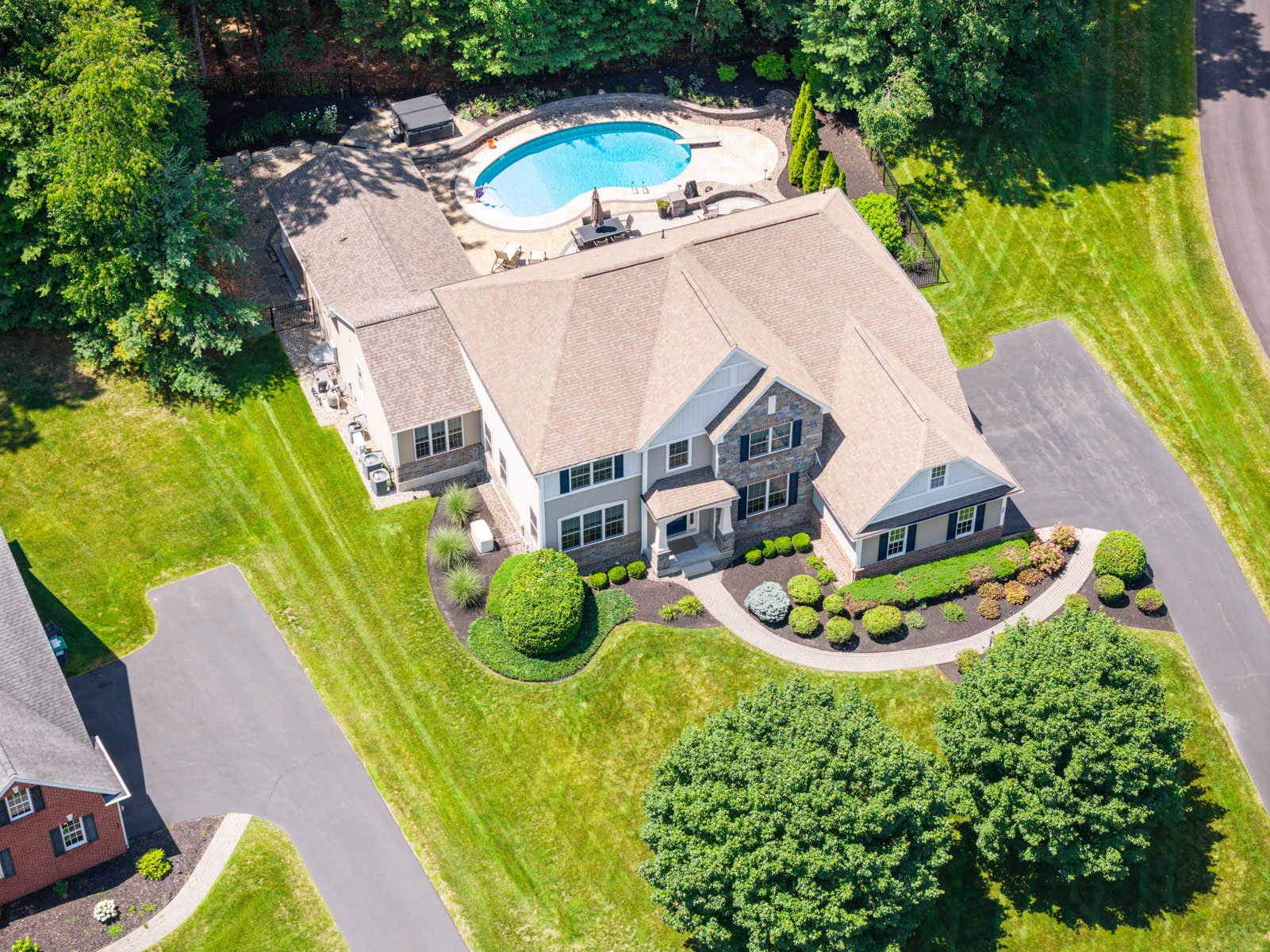
Here are some seasonal considerations to think about.
Spring
Spring is when your landscape starts coming back to life, so early bulbs, flowering ornamental trees and shrubs, and emerging perennials will provide the first signs of color after winter. It's also a time when the structure of the hardscape becomes particularly noticeable against the fresh spring growth.
Summer
Perennials are blooming, trees are providing shade, and patios become gathering spaces for everything from morning coffee to weekend dinners. Planting around the patio can make the space feel cooler, more private, and more connected to the rest of the yard.
Fall
Between the Adirondacks, Catskills, and the mature trees throughout our communities, fall color is a major part of the local landscape experience (and something your landscape should highlight). Thoughtful planting can complement that seasonal display with fall-blooming perennials, grasses, shrubs with interesting berries or foliage, and trees selected for strong autumn color.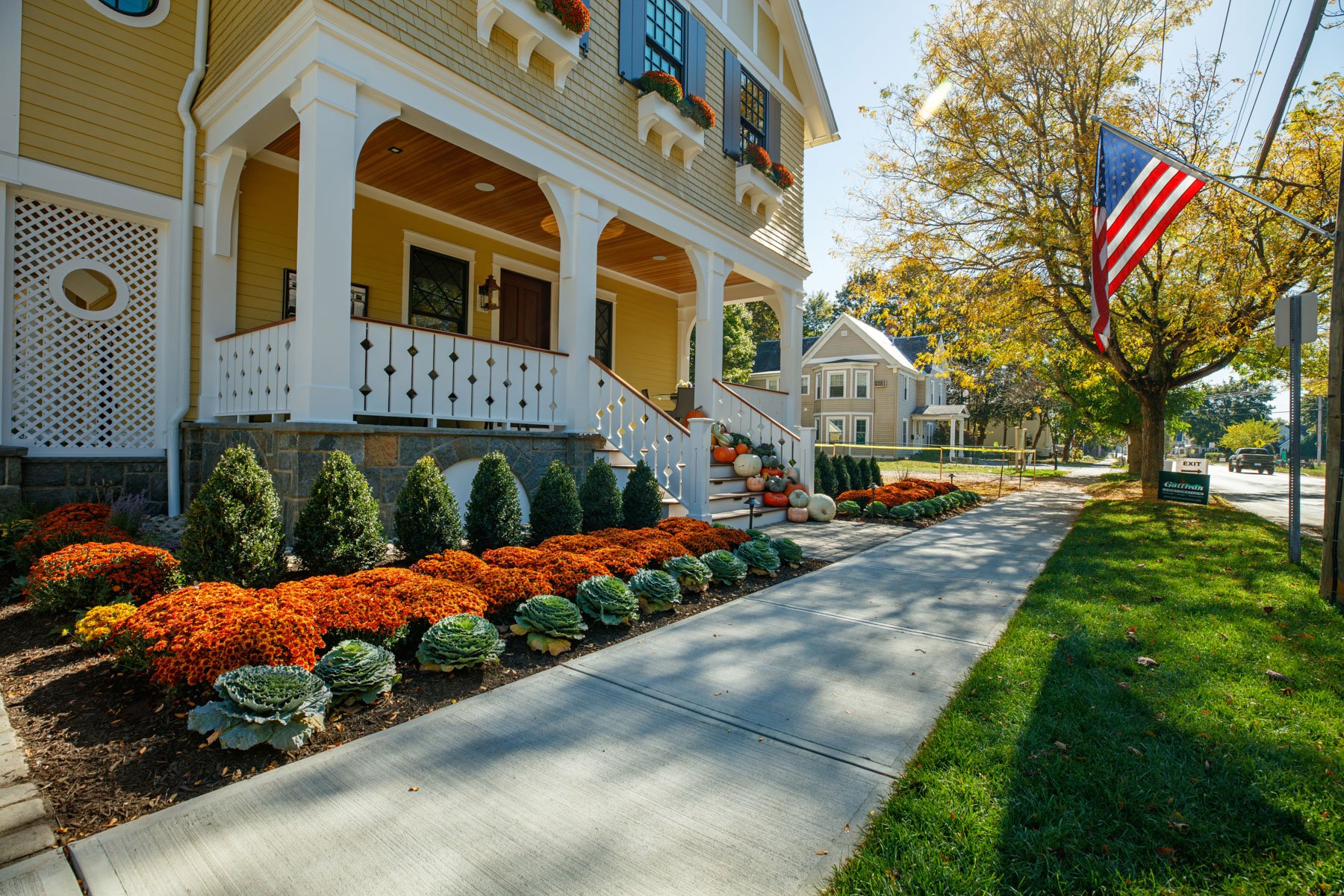
Winter
Winter here is when our landscape designs truly get tested. The leaves are gone, almost all flowers are dormant, and our properties are usually covered in snow. This is when evergreen structure, tree form, stonework, walls, walkways, and other hardscape elements become particularly important.
Common Hardscape & Planting Mistakes Homeowners Make
Over the last several years, we’ve seen homeowners in our region learn these balancing-act mistakes the hard way. We’re sharing a few of the most common with you – not to cast judgment on those who want to DIY, but to help you avoid them if you choose to tackle this route on your own.
- Treating every project as a separate project: A master plan is the right route, even if you don’t tackle it all in a single phase. This helps you consider every element and avoid a disjointed, chaotic design.
- Planting without the proper spacing: It’s tempting to plant as close as possible to avoid your beds looking sparse, but it’s crucial to plan for regrowth and maturity. What looks like plenty of space between plants today may not feel like much space five or ten years from now.
- Ignoring snow & winter considerations: For many, this doesn’t become an issue until you experience your first cold season here. Where does the snow go? How do you clear spaces without damaging your plantings? If you think on this before you design, it can save you a lot of heartaches and headaches.
Does Professional Landscape Design Matter? We Think So
You can certainly choose a patio material and pick out a few plants yourself – there are a lot of elements that are OK to DIY.
But designing an entire property is a very different challenge. Having a professional landscape designer on your team can make an enormous difference in the longevity of your project. They’ll consider and plan for things like:
- What will those trees look like when they mature?
- Will the planting bed still have enough room?
- How will the patio look when the leaves drop?
- Does the walkway make sense when it's covered in snow?
- Will the plants tolerate the conditions around the driveway?
Those (and many others) are the details that separate an outdoor space that looks good on installation day from one that continues to look and function beautifully years later.
At Gallivan, landscape design and installation are approached as a single, cohesive process. The goal is always to create an outdoor environment that works with your property, architecture, the seasons, and the way you want to live outside.
Frequently Asked Questions
What plants grow best around patios in New York's Capital Region?
The right plants depend on the specific conditions of your property, including sunlight, soil, drainage, mature space, deer pressure, and exposure to winter conditions. Evergreen shrubs, ornamental grasses, flowering perennials, ornamental trees, and other plants can all play a role in patio planting.
How do you choose plants that complement hardscape materials?
Every project is different, but we suggest starting with the overall character of the home and hardscape. Consider the color, texture, scale, and style of the stone, pavers, walls, or other materials, then select plants that create complementary contrast.
Does professionally designed landscaping increase home value?
Professional landscaping can improve a home's curb appeal, functionality, and outdoor living experience. The value of a landscape investment depends on the property, project, quality of construction, and local market.
Work With a Professional to Bring Hardscape & Planting Together
Ready to rethink your backyard? Our team at Gallivan can help you develop a landscape plan that brings together hardscape, planting, and outdoor living in a way that feels right for your home and the Capital Region. Reach out by completing our consultation form and we'll schedule a time to chat.